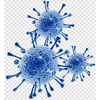
Here is a compilation of the best information available today about the coronavirus, its symptoms, and steps you should take to protect yourself and your family.
What is coronavirus?
Coronaviruses are a family of viruses that range from the common cold to more severe viruses such as Severe Acute Respiratory Syndrome (SARS-CoV) and Middle East Respiratory Syndrome (MERS-CoV).
COVID-19 stands for coronavirus disease 2019, and it is considered a “novel” (or new) coronavirus not previously seen in humans. The virus causing COVID-19 is called SARS-CoV-2.
How does it spread?
Although scientists still have much to learn about COVID-19, they do know it spreads easily. Current thinking is that the primary way the virus spreads is during close person-to-person contact (within 6 feet) via respiratory droplets. These droplets are released into the air when a person coughs or sneezes.
People are thought to be most contagious when they are sick, but there have been reports of people who were not yet showing symptoms spreading the virus to others.
It’s possible that the virus can survive for some length of time on surfaces; if it does, it could be spread by touching the surface and then touching mouth, nose, or eyes, but this is not thought to be a primary form of transmission. The virus can also be spread to anyone who has direct contact with body fluids, such as blood or phlegm from a person who has COVID-19.
What are its symptoms?
The main symptoms are fever, cough, and shortness of breath. In severe cases, pneumonia may develop. Symptoms may appear two to 14 days after exposure to the virus.
Anyone with these symptoms who has either been in close contact with someone known to have COVID-19, or who recently traveled from an area with an ongoing spread of COVID-19 should seek medical advice.
The Centers for Disease Control (CDC) advises calling ahead before going to a doctor’s office or the emergency room so the proper precautions can be taken when you arrive.
What preventive measures does CDC recommend?
Avoid touching eyes, nose, and mouth with unwashed hands.
Wash hands frequently with soap and water for at least 20 seconds (the time it takes to sing ‘Happy Birthday’ twice).
If soap and water are not readily available, use an alcohol-based hand sanitizer with at least 60% alcohol.
Cover coughs and sneezes with a tissue and throw the tissue into the trash.
Clean and disinfect frequently touched objects and surfaces using a regular household cleaning spray or wipe.
Face masks should be worn by people who show symptoms of COVID-19 to prevent disease spread. Health workers and anyone caring for a person with symptoms should also wear a face mask. The CDC does not recommend that people who are well wear a face mask.
How can I access resources from home?
Some people who are taking precautions against the coronavirus may want to avoid public places. But they may also want to read a book, watch a movie, or do some research while they stay at home.
Mary Wilson, Harvard’s library director, says many of the library’s resources can be accessed without ever walking in the library door. A library card allows a person to borrow an e-book or an audiobook online. The library’s databases are accessible through the website. Movies, television shows, graphic novels, and more are available through Hoopla, also on the library website. There’s even a button to click if someone wants to ask a reference librarian a question.
For homebound people who want to read a plain old printed book, the Friends of the Harvard Public Library will deliver to patrons in Harvard and Still River who have registered for the service. To receive a registration form by mail, residents should phone the library.
Compiled by Joan Elyesil and Marty Green
Sources: World Health Organization,
Centers for Disease Control and Prevention (CDC)