
At last year’s Oscars ceremony, the producers of the event cut eight awards—including all three short film categories—from the live broadcast, evidently feeling the show needed more tacky pageantry. This year, thankfully, they have backtracked. Also to our benefit is the annual release of the nominated shorts as a compilation feature in theaters (a special release that the network ShortsTV has been supporting since 2006). This year’s live action shorts showcase the talents of filmmakers usually missing from your standard American theater, spanning various countries and languages..

Sigrid Kandal Husjord and Ola Hoemsnes Sandum in a scene from “Night Ride.” (Courtesy photos).
‘Night Ride’ (Norway)
On the lighter side is the Norwegian film “Night Ride,” about a woman who inadvertently finds herself conducting a commuter train. What begins as a slapstick comedy soon turns tense as the train picks up passengers, two of whom start harassing a woman riding the train by herself. The viciousness of the encounter is a sobering foil to the driver’s strange and silly adventure, while the snowy Christmastime setting—“The Twelve Days of Christmas” comes on the radio as the two men raise their voices in anger—offers another odd contrast in a film stuffed with them. Funnier and stranger than the other nominees, “Night Ride” is the closest thing to a crowd pleaser here.
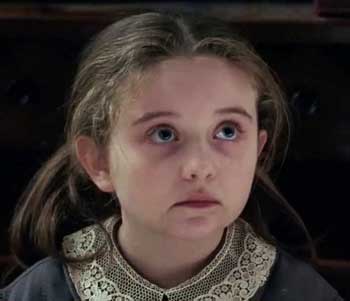
Melissa Falasconi in “Le Pupille.”
‘Le Pupille’ (Italy)
Undoubtedly the most complete and assured film in the group is “Le Pupille” (“The Pupils”), an Italian slice-of-life comedy about girls in a parochial school during wartime. Featuring a spate of excellent performances and a playful style that breaks the fourth wall repeatedly, the film turns its drab setting into a playground. In the film’s best set piece, the girls are posed in a nativity scene for locals to come see; like any other group of children asked to stay still, they squirm and make faces, making the nativity scene come endearingly alive. Moments of this kind of idiosyncratic humor abound, from the woman who begs the girls to pray for her lover to come back to her, to the Mother Superior using up the last of the soap to wash out the girls’ mouths as punishment for their singing a song about kissing.
The main character is Serafina, a “bad girl” whose rebellion against the Mother Superior is equal parts naive and mischievous, her disobedience born from her misunderstanding of the scruples and politics of the church. Things come to a head when the nuns receive an extravagant cake (made, as they keep noting, with 70 eggs), leading to an excellently orchestrated Christmas morning standoff between Serafina and the Mother Superior. At nearly 40 minutes, “Le Pupille” is nearly twice as long as the next longest short in the mix, but it feels as quick as a daydream.
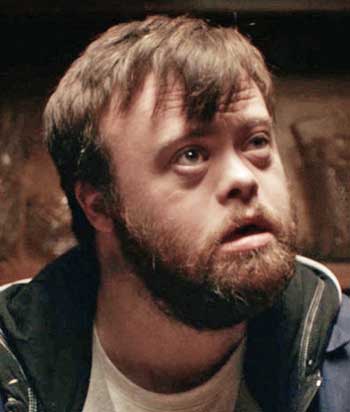
James Martin in “An Irish Goodbye.”
‘An Irish Goodbye’ (Northern Ireland)
By contrast, “An Irish Goodbye,” the weakest film in the group, takes too long saying too little. Following two brothers as they complete their mother’s bucket list after her death, the film aims for heartfelt family dramedy but often lands in kitsch. It has its moments—a tactless priest blathers on in far too much detail about how his aunt was trampled by a cow—but “An Irish Goodbye” usually misses the mark, its toothless jokes and unremarkable plot making for a cloying watch.

Mila Heilmann Kreutzmann in “Ivalu.”
‘Ivalu’ (Denmark)
Elsewhere the shorts tread more challenging waters. “Ivalu,” a Danish-produced drama set in Greenland, takes us on a quiet journey through the tundras and ice fields of the Arctic, centering on a young girl searching for her missing sister. The girl follows a raven, interpreting the bird as the avatar of her sister, and as she treks across the frigid landscape, she dredges up memories of her sister that eventually explain her absence. Despite the awful truth of her sister’s disappearance and the harsh reality it reveals about their lives, “Ivalu” also makes room for natural beauty and folkloric wisdom. It’s grim, but with the spirit of a fable.

Nawelle Ewad in “The Red Suitcase.”
‘The Red Suitcase’ (Luxembourg)
“The Red Suitcase,” a Luxembourgian drama, is also about a young girl confronting a harsh and unjust reality. Ariane, an Iranian teenager, wanders through the Luxembourg air-port, clutching the titular piece of luggage and avoiding the man who’s waiting to pick her up. Like a cat-and-mouse game told from the perspective of the mouse, the film is ominous and claustrophobic, revealing the many dangers that prey upon a woman in Ariane’s circumstances. Even if the film is clumsy in execution, it still wrings a tense and poignant climax from its simple ingredients.
Danny Eisenberg grew up in Harvard and has been reviewing movies for the Harvard Press since 2010. He lives and works in Denver, Colorado.