A special town meeting is, well, special, convened as required to deal with projects that can’t wait and opportunities best seized sooner rather than later. This year’s warrant has its share of both, and we’ve done our best to explain its nine articles in our “Warrant in Plain English,” as well as in deeper analyses of Articles 2, 3, 6, 7, and 8.
It would be easy enough to repeat all the usual reasons why voters should attend the Nov. 6 meeting, but we’ll spare readers that litany. How badly, though, do residents want to keep the town’s 275-year open town meeting in which every voter gets a say in town decisions? The town’s Charter Commission voted to keep it, stating that “the historic and foundational principles of direct democracy” should be maintained, in spite of “recent and escalating” changes in demographics.
CLICK CHART TO ENLARGE
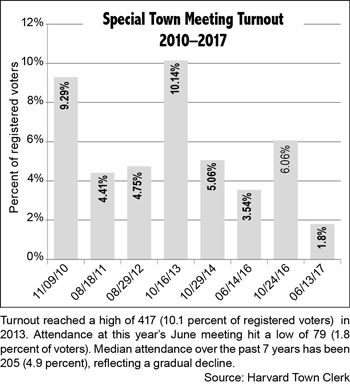
Still, can a town meeting be called a town meeting when only 79 voters (1.8 percent of the electorate) show up, as happened this summer (see graph)? Are Harvard voters ready to let such a small, unelected slice of Harvard—which, incidentally, includes Harvard’s historical portion of Devens—decide bylaws, budgets, and projects?
Although Harvard is too small for a city council and mayor, it is just large enough for a representative town meeting form of government in which attendees are elected. Barring a technological fix that would enable citizens to participate and vote from home or anywhere else on the planet, a representative town meeting is one way to deal with declining attendance. But the nine members of the Charter Commission concluded townspeople prefer to stick with an open town meeting.
In conversations with Harvard townspeople, we’ve been struck by how few were aware of next week’s meeting. Rights entail obligations. The decision to keep an open town meeting obligates voters to participate. Use it or lose it, as they say.