Wally Lamb and Donna Tartt are two authors whose earlier works I have read and liked. Lamb’s “She’s Come Undone” and Tartt’s “The Secret History” are both heavy books—literally and figuratively —with compelling characters at their centers. I recall being totally immersed in their fictional worlds, remembering scenes long after I had left them. So it was with delight that I found new works by both of these writers on the bestseller list.
Two novels, similar issues
As expected, their two new books—”We Are Water” by Lamb and “The Goldfinch” by Tartt—are long and require commitments of time and emotional stamina. While very different in style and mood, both confront the same essential issues. At the heart of each is a character who has suffered a childhood loss, actually the same loss, and must work out that grief. And each has a terrible secret connected to the loss that propels the characters’ actions and affects their relationships. Art plays a major role in both novels.
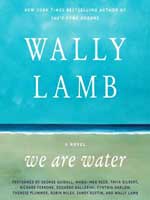
In Wally Lamb’s “We Are Water” Annie Oh is about to get remarried and has invited her ex-husband and three grown children to the wedding. The point of view shifts among these five characters as they review their relationship with Annie and decide whether they are emotionally able to attend the upcoming event. Orion, the ex-husband, remembers how he and Annie first met, married, had kids, and then how she spent more and more time on her art and “migrated away” from him. In the process, Orion confronts his own choices and actions, and he reluctantly comes to acknowledge his role in the increasing distance that grew between them. But still a strong connection remains. Andrew, a twin, refuses to attend the wedding but will not acknowledge his anger toward his mother until his younger sibling makes him confront repressed memories of his childhood. The “do-gooder” twin, Ariane, has literally distanced herself from the family, but is returning for the wedding, more for reasons having to do with herself than her mother. Annie herself is wracked with doubts, and it is only when the presence of a cousin she has not seen since childhood forces her to remember a night that changed her life, that she can move forward.
‘Water’ contrivance doesn’t ring true
I found the characters of Annie and Orion complex and engaging, and I liked the way the shifting points of view take the same pieces of the past and make them fit together differently. As the characters confront their secrets and their guilt, they are freed to ask understanding and forgiveness, from themselves and from others. What I found less effective were some contrivances on Lamb’s part. One was a plot turn predicated on the appearance of two characters that seemed “fishy” at the time. The result allowed Lamb to avoid dealing with potential complications. It also led to a solicitous attitude among family members that belied earlier complex feelings. Another contrivance is an act of violence occurring in the same place and the same way as an earlier one. It suggests retribution coming full cycle and seems symbolically fitting. But it doesn’t ring true.
The title comes from something Orion says at the end of the book. “‘We are like water, aren’t we? We can be fluid, flexible when we have to be. But strong and destructive, too.’ And something else, I think to myself. Like water, we mostly follow the path of least resistance.”
Catastrophic event sets ‘Goldfinch’ plot in motion
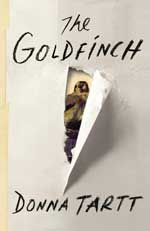
The early chapters of “The Goldfinch” sent me reeling as I relived the catastrophic event that Theo Decker undergoes at the age of 13. I found it physically painful to endure his suffering in that moment and later, as his loss continues to define him, geographically and emotionally. The secret Theo carries with him both uplifts and destroys him.
What I loved is the sense of place Tartt invokes, from the richly decorated upper Manhattan apartment of Theo’s friend to the bleak, cheap house in Las Vegas, to the over-stuffed antique shop back in the Village with its old clocks, books, furniture, and velvet curtains. Wherever Theo was, I felt as though I were within those same walls. And the main characters, remindful of Dickens as almost-but-never-quite caricature. Hobie, the furniture repair artist with his huge physical presence and kind heart; Boris, Theo’s degenerate Ukrainian friend, bound for destruction; Pippa, the red-haired musician, wounded in the same ways as Theo. Lesser characters are vivid, defined by a few strokes. Theo sees a debt collector as a “cartoon strongman or a Mountie blown up by a bicycle pump – doughball nose, tense slit of a mouth, all bunched tight.” Another con artist is “sharp-faced with an evil red-rimmed gaze and tiny, brownish saw teeth. He made me think of a rabid fox.”
For half of the book I cared terribly about Theo. I felt empathy for his grief and moral dilemma, admiration for his courage, and delight at his growing closeness to Hobie, an affectionate father figure. I wanted to whisper encouragement for his stammering attempts to confess his feelings toward Pippa, and I wanted to whisk him away from the bad influence of Boris, with his continuous cursing, drugging, and drinking. Even when Theo is back in the Village working for Hobie, I wanted to rationalize and forgive the unethical choices he was making. I wanted to explain his behavior away by connecting it to his earlier loss, but I couldn’t make that work.
More than halfway through the book comes a brilliant plot turn, which Tartt has executed masterfully. An earlier action is revealed that is totally believable, perfectly in keeping with the character. For the reader, there is a comment given at the time that registers but sends up no red flag. After the truth is revealed, the reader remembers the “clue” and it all makes perfect sense. But that revelation takes the plot into a new world of criminal activity, and for me it took Theo away; he became someone I didn’t understand and didn’t particularly care about anymore.
A bleak tale with glimpses of humor
The mood of the novel is mostly bleak but with glimpses of humor and of warmth in relationships. Theo’s early depression is warranted by his experiences. Toward the end of the book, though, he has given in to self-pity and a general angst for the world, where he rambles on about how our lives are subject to “the stray chance,” and human suffering is the bottom line. His proclamations that art can “save” us ring true only sentimentally. Throughout, Theo reminded me of Dickens’ Pip in “Great Expectations.” Their circumstances parallel to a great degree. But Theo’s world is much bigger than Pip’s and his despair much deeper.