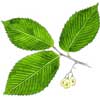

Since the 1930s, Dutch elm disease (DED) has been a true nightmare on Elm streets across New England. In 60 years, 75 percent of the 77 million elm trees in New England and the Midwest have been devastated by DED, Harvard’s included. The 1974 Annual Town Report reads, “The historic elm is a gift of nature, whose worth is only realized when it has been reduced to a stump. It can be measured only in terms of loss. There is no replacement.”
In an effort to save Harvard’s remaining 45 elm trees, Bill and Anne Phair established the Elm Commission in 1974, the first of its kind in the United States. Now in its 40th year, the Elm Commission continues to preserve, protect, and plant American elms in Harvard.
Symbol of liberty
As the official state tree, the American elm is a symbol of Massachusetts. The branches of the Liberty Tree, a grand elm on Boston Common, sheltered the American colonists as they protested the Stamp Act in 1765. This tree was cut down when the Loyalists occupied Boston, but the image of an elm tree was stitched on flags, flown in battles during the American Revolution, and seen as an undying symbol of liberty.
The elm tree is resistant to temperatures of minus 44 degrees Fahrenheit and adaptable to various (rocky) soils, making it an ideal tree to plant along city streets in New England. It can live for hundreds of years, and its arching branches reach heights of 120 feet or more. However, New Englanders’ fondness for an elm’s shade created a monoculture, allowing susceptibility to the aggressive and ruthless Dutch elm disease.
It is believed that in 1928 a shipment of logs from the Netherlands, bound for a furniture company in Ohio, carried the elm bark beetle to North America. This beetle transmits a fungus to an elm tree, which, in response, plugs its own xylem and phloem in an attempt to stop the disease from spreading. Eventually, the tree cuts off its own water and nutrient supply, essentially strangling itself.
Budding arborists at Bromfield
Anne Phair moved to Harvard in 1955, as DED was decimating trees across New England. An outdoor enthusiast, Phair was not content to watch the trees in her town wither and die. In the early 1970s, she got in touch with the Elm Research Institute in New Jersey and heard about specialized elm care—a preventive treatment option that requires injecting elm trees with fungicide.
The Citizens of Note write-up in the Harvard 1995 Annual Town Report describes Phair’s early initiatives as being met with “an initially apathetic response in Harvard.” The enthusiastic support Phair needed to save the Harvard elms came from an unlikely cohort: a 10th-grade biology class at Bromfield.
Dr. Dorothy Andrews, head of the science department at the time, invited Phair into her classroom to speak on the tragedy of the American elm. The students were so inspired that they formed the Harvard Elm Project with the goals of raising awareness among citizens of Harvard and saving the elms for future generations.
Signs began to appear on elm trees in Harvard that read, “I help you, please help me!” and “Dead-dying-gone.” Phair became “something of a celebrity,” according to the report, after trying to save the elm trees, and she was invited to attend the International Shade Tree Conference. At the 1973 Town Meeting, money was made available to treat the elms on the Common; and the following year, the Harvard Elm Commission was established.
Phair was quoted as saying the first year of the commission “brought with it many problems, pressures, and important decisions that had to be made almost immediately.” With the help of the H.E.P. students, Phair was able to number the trees around the Common. The students raised funds to pay for the chemicals, the equipment, and the labor costs associated with injecting the elm trees.
Anne’s husband, Bill, joined the Elm Commission to help with his wife’s rescue mission. He invented the “Elm Medics Injector,” a new form of equipment adopted by arborists around the country. By the end of the commission’s first year, Phair saw that “much has been accomplished…to stave off the angry chain saw.” In 1995, 45 healthy American elm trees stood in Harvard, a credit to the Phairs and the dedicated Bromfield students.
Today the Elm Commission uses the same injection techniques that were pioneered by the Phairs 40 years ago. The aptly named Bill Calderwood serves as chairman of the Elm Commission, a position he has held since 2001. He praises the skills of the other members of his board: “I am just an engineer, and I like to make things happen,” he says, but, “it takes a commission of different talents to get the job done.”
Maintaining the old, planting the new
In addition to injecting trees with fungicide, the Elm Commission oversees pruning, sanitation, and fertilization of the elm trees. Pruning is essential to remove potential breeding sites for beetles, but hiring an arborist to prune a big tree might take half a day and cost between $400 and $500 per tree. Injection is now done by professional contractors, rather than high school students, which has also been a considerable cost.
“There are all sorts of expenses associated with old trees,” says Calderwood. In 2003, the Elm Commission started a private Tree Fund with the Harvard Conservation Trust. The tax-deductible donations have “really helped us do things that we couldn’t have done with the public funds,” says Calderwood. In addition to hiring contractors, Calderwood says funds are used to “put lime down, add aged woodchips, mulch, and wire certain trees which pose safety hazards.”
After a few years, Calderwood says, “We [the Elm Commission] had come to the realization that rather than spending so much money on the old trees, we should take a balanced approach and plant new trees.” The Elm Commission surveyed the 45 elm trees and decided to focus their efforts on tending 20 priority elms. These trees are located in what Calderwood refers to as “the town corridor,” or the area around Pond Road, the schools, the Common, Town Hall, and the police station.
Planting for the future
During Calderwood’s time on the commission, he estimates they have planted more than 50 new elm trees around the town corridor. “We wanted to plant some disease-resistant cultivars—a specific clone of trees that has been tested by the National Arboretum,” he says. Though several disease-resistant elm trees have been created, not all are successful, and only time will tell their true resilience. Calderwood says there are about seven types of cultivars now planted in Harvard. “We don’t want to plant too many or put all our eggs in one basket,” he explains. Just because an elm tree is disease-resistant doesn’t mean it will survive. “It’s not a sure bet; life is not perfect,” says Calderwood.
Planting season begins in May for the Elm Commission. The first-grade class at Hildreth Elementary School plants the first tree of the year shortly after Earth Day. At this “first-grade planting,” students get their own tree sapling to plant as well.
The Elm Commission project requires patience through many planting seasons. Calderwood says it could take a few decades to understand which elm tree cultivars will do well. After a pause, he comments, “I don’t know if I’ll be around for that, but that is what we’re after.” If the Elm Commission continues its tradition for another 40 years, future generations of Harvard citizens will be able to answer that question.