At the Wednesday, Oct. 8, Special Town Election, voters will choose one of two candidates to fill a seat on the Select Board left vacant when Rich Maiore resigned last spring. The winner will serve until next year’s Town Election, the amount of time remaining in the three-year term of the empty seat.
The Press asked the candidates, Eric Ward and Adam Wool, to introduce themselves, tell us why they are running, and then answer three questions on the minds of voters. Their responses follow.
Eric Ward
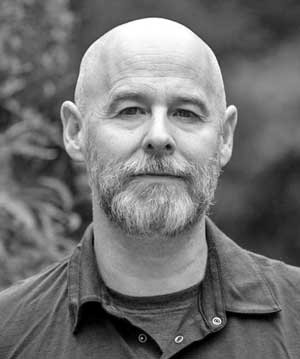
Eric Ward. (Courtesy photo)
I am running for Select Board because I believe in what we have built as a town, and I want to ensure we continue to progress thoughtfully and deliberately. Helping Harvard grow and remain special is how we create the best experience for future generations, so they will also want to return and pitch in.
I have volunteered in town for several years, serving on the Finance Committee, the Capital Planning and Investment Committee, and the search committee for town administrator, as well as assisting with set design and construction for the school theater program. Professionally, I have spent many years working with clients through challenging situations and have always brought focus and calm to those situations. I believe that bringing people together, drawing out every voice, and finding common ground is paramount to finding optimal solutions. This is the skill set I will bring with me to the Select Board.
The Select Board has set six goals for itself this fiscal year. Which of these do you think is the most important, and what new perspectives and skills can you offer that will help you and your colleagues achieve it?
Of the six goals adopted by the Select Board for this year, “Volunteer operations, including the Harvard Charter and Select Board policies and procedures,” is most important.
During my time serving on and interacting with various town committees, I have seen firsthand how important it is that our processes are clear, consistent, and respectful of people’s time.
I bring a perspective that focuses on making government more effective and accessible. My experience leading the budget process gave me insight into the strengths and friction points across our departments. I will apply that knowledge to streamline policies and procedures, strengthen transparency, and encourage more open communication. I can help ensure that our boards and volunteers are empowered to succeed, which will ultimately make every other goal more achievable.
This goal also includes a review of the town charter, a living and foundational document for our town government. It is essential that this charter be regularly reviewed and revised to ensure it aligns with our future planning.
While the other goals are all important for our town, these bedrock elements require attention and can bring a new approach to facilitate the changes we need to move forward successfully.
Despite the $1.4 million override passed by Town Meeting in May, the most recent Finance Department revenue and expense forecast predicts a $1.7 million deficit in fiscal year 2027. In an era in which the needs of the town consistently exceed its resources, what ideas do you have for delivering a balanced fiscal 2027 budget to Town Meeting next spring that has the support of the Select Board, FinCom, the schools, and town departments and committees without sacrificing vital services?
Achieving a balanced budget in a way that has the support of our boards and committees, without sacrificing vital services, requires new revenue sources. Too much of our budget is comprised of costs that the town does not have direct control over for us to achieve this through budget reduction alone.
We must take a hard look at our priorities and identify areas for efficiency and compromise. Strategic actions, such as enacting a form-based code, help us open the town to businesses in a way we have not historically done well, while also ensuring that development will occur in a manner that fits well in Harvard. We should pursue shared services wherever it is practical to consolidate costs.
Finally, we need a long-term financial/budget plan to establish a roadmap to a balanced budget and to hold accountable those responsible for meeting that expectation. The road to a balanced budget will not be easy or short, but I will push for these actions to ensure the plan is clear and transparent to all of us.
In your estimation, how threatening to the well-being of Harvard residents and the sustainability of our town is the threat of a changing climate? What, in your view, is the most serious of those threats and what steps should the town take now to prepare for them?
In 2022, the Harvard Climate Initiative released the Climate Action Plan, which outlines the numerous challenges of climate change that we face and proposes a well-thought-out set of goals to enhance Harvard’s climate resilience and sustainability.
I believe that Harvard has made progress in many areas: The tree warden routinely reviews potentially damaging trees and plans for their removal; we have made investments in solar energy; and we routinely look for more environmentally friendly options in our capital purchases. We are on a great path, and we need to keep pushing it forward.
While Harvard continues to make progress, the impacts of climate change are still very real for us. Our most immediate concern needs to be preparing our people and our infrastructure for resilience, while we continue to push forward on sustainability. Projects like improved culverts and power line clearance reduce the impact of increasingly damaging storms. Having neighborhood communication and response plans to check on each other when extreme heat or storms hit us helps ensure nobody is left unchecked in times of need. Additionally, the gaps in our cellphone service throughout town create risk of isolation and strain communication with emergency services when we need it most. We cannot prevent every challenging situation, but we can take steps to prepare.
When I think of progress for Harvard, I am thinking of what the town will be for our children and for my wife and me, as we grow older. I am also thinking back to my grandfather chatting with friends at the General Store over coffee when I was young. I am deeply committed to what Harvard has been and what it can be. In the end, that is why I am running.
Adam Wool

Adam Wool. (Photo by Lisa Aciukewicz)
A few short weeks ago I decided to enter the race for a seat on the Harvard Select Board. Some of my reasons for running, as I stated in an earlier letter to the Harvard Press, are centered on my background, which extends to Harvard, my experience being a state legislator as well as a longtime small business owner in Alaska.
As a business owner, I had to figure out ways to maximize revenue while at the same time minimize expenses. These are common themes for any business and also common themes for state and municipal governments. It’s not an easy balancing act, especially because the role of government is not to maximize profit but to serve its citizens.
The Select Board has set six goals for itself this fiscal year. Which of these do you think is the most important and what new perspectives and skills can you offer that will help you and your colleagues achieve it?
The six goals the Select Board has identified—Ayer Road development, budget process, revenue opportunities, volunteer board communications, Devens, and athletic fields—are all important, but the one I see as most critical is increasing revenue opportunities.
For years, Harvard has operated with a structural deficit, relying on tax override votes to balance the budget. Quite simply, our expenses are exceeding our revenues. This isn’t rocket science, but it does require both urgency and decisive action. We’ve done many studies and hired consultants, but the time has come to move beyond discussion and start implementing solutions.
Some costs, like health care and construction materials, are beyond our direct control. But we can make smart choices about how we allocate funds and what projects to pursue. More importantly, we need to broaden our revenue base. Opportunities include encouraging sensible commercial development along Ayer Road, pursuing state and federal grants for infrastructure and sustainability projects, and exploring partnerships with Devens to share resources and eventually expand our tax base.
In talking with residents, I hear the same concerns: People don’t want higher property taxes, and they don’t want override votes year after year. I share that frustration. If elected, I will bring both my business background and legislative experience to help Harvard move from study to action. Harvard deserves financial stability that doesn’t fall squarely on the backs of homeowners.
Despite the $1.4 million override passed by Town Meeting in May, the most recent Finance Department revenue and expense forecast predicts a $1.7 million deficit in fiscal year 2027. In an era in which the needs of the town consistently exceed its resources, what ideas do you have for delivering a balanced fiscal 2027 budget to Town Meeting next spring that has the support of Select Board, FinCom, the schools, and town departments and committees without sacrificing vital services?
Balancing Harvard’s fiscal 2027 budget will be challenging, and I want to be up front that I don’t expect there to be a simple solution that avoids a tax override entirely. With projected expenses exceeding revenues by $1.7 million, and given the time it takes for new revenue sources—such as development on the Ayer Road commercial zone—to come online, it is necessary that some combination of measured budget cuts, careful spending, and alternative revenue will be necessary.
To build a budget that earns support from the Select Board, Finance Committee, schools, and town departments, transparency and early collaboration are key. Committees and residents need to understand the trade-offs involved and the impacts of their decisions. For example, articles passed at a recent Town Meeting added to expenses without fully exploring the broader budget impact. We need more discussion about how each choice affects the town’s fiscal health and tax burden.
At the same time, we should aggressively pursue all potential revenue opportunities. This includes exploring state and federal funding, grants, and creative partnerships that bring in resources without adding to local taxes. Even small opportunities can accumulate.
Finally, we need to consider prudent, targeted expenditure reduction, in areas that minimize impact on vital services and to complement revenue efforts. My experience in business and as a legislator has taught me that achieving balance requires both careful planning and decisive action, and I will bring that approach to the Select Board.
In your estimation, how threatening to the well-being of Harvard residents and the sustainability of our town is the threat of a changing climate? What, in your view, is the most serious of those threats and what steps should the town take now to prepare for them?
I believe climate change is a serious global threat that must be addressed with urgency. Many of the most effective solutions will require national and international cooperation, as they have in the past, though unfortunately we’ve lost some of that shared momentum in recent years.
We can already see the effects of a changing climate: extended droughts, flash floods, warmer winters, and other more frequent severe weather events. At present, I don’t see an immediate, direct threat to the daily well-being of Harvard residents, though that could change over time. Historically, when more of our community depended on farming, climate shifts would have had a greater impact. While agriculture is still important here, far fewer residents rely on it for their livelihood today. The late season freeze a couple years ago was a disaster for our stone fruit crops.
That said, there are local consequences we should take seriously. Bare Hill Pond has faced invasive species challenges linked in part to warmer waters, though recent interventions have helped. Rising temperatures also bring more heat waves in late spring and summer. At Bromfield, classrooms can become uncomfortable at the end of the school year. At our most recent Town Meeting, the town approved funds for a study on replacing the school’s current heating and cooling system with a heat pump system, which would both improve comfort and hopefully be more energy efficient.
In my view, the most serious threat is the gradual but steady rise in temperatures that affects our natural environment, infrastructure, and quality of life. Harvard should continue investing in practical, forward-looking solutions that improve resilience while keeping our community livable.