Rebecca Brown
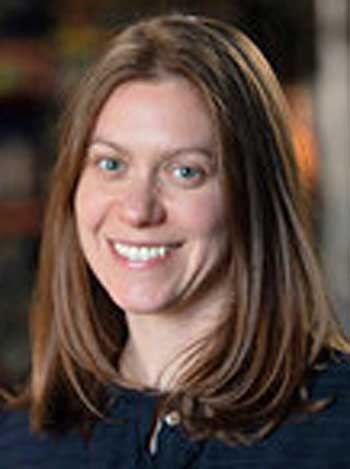
Rebecca Brown. (Courtesy photo)
My background is in higher education administration, teaching and learning, and teaching with technology, where I’ve worked with graduate student instructors, preparing them to enter the college classroom, as well as with faculty on designing engaging and effective learning opportunities for their students. The library is a cornerstone of the community and already offers a wealth of resources and programs. I want to ensure the library is able to continue to offer ways for the community to come together in learning and sharing new knowledge.
The library is reviewing its use of interior space. What changes would you like to see and why?
I would like to see the furniture updated to be more modular, on the second floor especially and in particular in the teen reading area. This would allow for the furniture to be reconfigured, enabling more group work. In general, I would support enhancing the space to increase the comfort and feasibility of collaborations, not only for students but for all patrons. This could be through choice of furniture, addition of study rooms, and rearrangement of furniture to create more communal spaces for working, discussing, or reading together.
How will you respond if the federal and state government make choices that cause our libraries to lose funding for circulating banned books?
Among the Harvard Public Library’s values are free and open access to a wide range of resources and protection of intellectual freedom. Any book ban would come into direct conflict with those values. I would stand up in support of the library continuing to circulate banned books and look for alternative funding sources to maintain current operations. If operations needed to be scaled back, the trustees and staff would need to consider when it would be most impactful for the library to be open to patrons and to make sure all community members knew about the eResources available 24/7. This would be a devastating turn of events, but staying committed to our values is paramount in the face of censorship.
What kinds of programs would you like to see continued, increased, added, or eliminated?
I think the library already offers a wonderful range of programs—for all ages, across genres, and in different formats. This variety is important to maintain, to meet the needs of the variety of patrons and bring new patrons to the library. It will be important, though, to gain a deeper understanding of who participates in the library’s current offerings and what community members feel is missing, so the library can consider how to establish a balanced and manageable slate of offerings for regular and new patrons.
Stacie Green

Stacie Green. (Courtesy photo)
My family and I have been residents of Harvard for 15 years. My two children were students in the Harvard Public Schools and then Parker Charter School. It has been my privilege to be a library trustee since 2014 and to serve as chair for the past three years. I have loved libraries since I was a child. When on vacation, I always like to check out the local library! Most recently, I was smitten with the Seattle Public Library. Professionally, I am an instructional designer and teach in a graduate program at Harvard Extension School.
The library is reviewing its use of interior space. What changes would you like to see and why?
While public libraries have historically been focused on books, modern libraries have broadened their function to be more community-focused. Our library serves as a “third space” in our small town, and I believe that some interior renovations can better support the library as a place where our community can come together. The trustees contracted with CBT Architects last year to conduct a needs assessment of our interior space and identified many exciting opportunities. A priority project is creating a new teen area that is so inviting that the teens start hanging out at the library after school at pre-pandemic levels. I would like to see a dedicated maker space for our 3D printer, but also crafting supplies, a sewing machine, and other tools. A modern kitchen in Volunteers Hall could provide opportunities for new types of programming. The Jeff Harris Local History Room is a light-filled room that could better serve as a meeting area and quiet study space through a thoughtful renovation. In addition to making changes to improve how people come together, we also need to attend to deferred maintenance. The biggest priority, and likely the most expensive project, is fixing the Volunteers Hall floor so that “spongy” is no longer the first adjective people use when describing the floor.
How will you respond if the federal and state government make choices that cause our libraries to lose funding for circulating banned books?
Public libraries are actually quite subversive, as they provide a place for free access to knowledge for everyone as well as a lending structure where communities can share resources that were funded through tax dollars. Libraries actively defend the right to read, the right to think, and the right to access diverse ideas.
If any federal or state decisions promoted removing books from our shelves, I would work closely with the board of trustees and library director to respond with a clear commitment to both the rule of law and the fundamental democratic principles our community holds dear. We would first contact the Massachusetts Board of Library Commissioners (MBLC) to understand the scope of the challenge. The MBLC has been closely monitoring the actions of the federal government that put public libraries at risk and will be able to provide guidance if the situation becomes dire. We would also work with municipal counsel to explore avenues for challenging any legal decisions.
Next, we would prioritize transparency and communication with the public. Our community reads and values knowledge—last year, each resident on average checked out 19 books!—so fully informing residents of the situation would allow our community to respond with more strength. Public libraries are funded through our federal, state, and local tax dollars, so everyone has a say in how their money is spent. Hosting open forums, sharing resources about First Amendment rights, and encouraging civic dialogue would all be essential. I would advocate that our community stand in solidarity with the MBLC, other library associations, civil liberties organizations, and libraries in neighboring communities. Resistance to censorship is most powerful when it is collective. Books and ideas cannot—and should not—be erased from public life.
What kinds of programs would you like to see continued, increased, added, or eliminated?
Right now, I’m excited about our pavilion and the possibilities for outdoor programming for all ages. We are fortunate to have such a large and beautiful outdoor space. Already, our fabulous librarians have scheduled many events, so I look forward to seeing what is popular. Go to the library website, take a look at the calendar, and then mark your calendar for the first Harvard Calling Music Festival on May 17. If you have a programming idea, please share it! So far, we’ve heard requests for outdoor movie nights, concerts, yoga, and tai chi. I’m interested in any and all programs that allow our community to come together. As shifts in technology allow us to spend more time alone, I feel it is important to be proactive about creating opportunities for human connection.
Sarah Saleh

Sarah Saleh. (Courtesy photo)
My family has called Harvard home for the past decade. I’ve been fortunate to volunteer in our schools, with Arm in Arm, and on the soccer field. I enjoy working with the library and have served on the Library Strategic Planning Committee, a library advisory committee, and partnered with the Harvard Public Library to host events like Cookbook Club. I hope to leverage my MIT training and experience as a design engineer and STEM educator to support our town’s lifelong learners. I would be honored to serve as a library trustee, championing free access, supporting our librarians, and strengthening our vibrant, welcoming library.
The library is reviewing its use of interior space. What changes would you like to see and why?
Given that our library welcomes over 70,000 visitors annually in a 20,000-square foot building last renovated in 2007, continued evaluation of the library’s interior space is essential to keep it welcoming and accessible for all ages and demographics. After months of gathering input, the library staff, trustees, and CBT Architects identified the Teen Room as a key development priority, and I fully support this. With teen program attendance on the rise, creating an inviting, dedicated space that fosters a sense of belonging and encourages lifelong library engagement is a must.
I would also advocate for more flexible, multiuse spaces to better support a wide range of programs. Reconfiguring areas for hybrid or larger events, such as collaborations with town groups, would meet growing demand while preserving quiet study zones. As technology needs evolve, we should also ensure flexible spaces for collaboration, remote work, quiet study, and community programming. Addressing storage creatively could also free up more public space without impacting collections. Finally, expanding initiatives like the “Library of Things” could free up space without compromising our print collections. Above all, regular community feedback—through surveys, suggestion boxes, or forums—should guide these updates to ensure the library remains a warm and welcoming center for all.
How will you respond if the federal and state government make choices that cause our libraries to lose funding for circulating banned books?
Free and open access to diverse viewpoints is fundamental to a healthy democracy and core to the library’s mission. If federal or state actions threaten funding unless the library removes banned books, I would stand firmly in defense of intellectual freedom. I would work with my fellow trustees to uphold our transparent, professional collection development policies, support staff against censorship pressures, and educate the community on the broader impacts of restricting access to information.To protect the library’s autonomy, I would strengthen local support—leveraging partnerships with the Friends of the Library, the Library Trust, and broader community networks. At the same time, I would advocate through statewide organizations like the Massachusetts Board of Library Commissioners (MBLC) and the Massachusetts Library System (MLS) to protect essential funding, such as state aid and access to shared resources. If necessary, I would also pursue grants and explore legal protections to ensure the library remains a welcoming, uncensored space for all. Upholding the library’s mission statement, social justice statement, and commitment to intellectual freedom would guide every decision I make.
What kinds of programs would you like to see continued, increased, added, or eliminated?
Our library’s programming is one of its greatest strengths. Last year alone we had over 400 programs—from children’s story times to teen and adult programming. I would love to see continued growth in programs that build connections and collaborations with other town groups, like the Cookbook Club does with Arm in Arm. Expanding the already strong partnership with the schools, the Council on Aging, and the Lions Club could also help reach broader intergenerational audiences. I would also advocate for more teen-led initiatives, hands-on STEM programs, and tech literacy workshops to help young people navigate emerging fields like AI. We could also explore more ways to utilize our beautiful pavilion with pop-up events like movies, farmers markets, and other community gatherings. Above all, quality matters more than quantity—programs should be meaningful, responsive to community interests, and accessible to all.
Molly Waring

Molly Waring. (Courtesy photo)
My family has lived in Harvard since summer 2015. Our kids, Mic and Anna, attended HES from kindergarten through fifth grade, and they are currently middle schoolers at the Bromfield School. If you don’t know me, we may have run into each other at the library, sports fields, Harvard General Store, school pickup lines, through Girl Scouts (this was my eighth year as the cookie manager of Anna’s troop), or the hiking trails. I’m an epidemiologist, public health researcher, and professor. I love to read, and I am a big fan of public libraries and the Harvard Public Library in particular.
The library is reviewing its use of interior space. What changes would you like to see and why?
I am not running with a prespecified agenda for how we use our interior library space. The library trustees are currently wrapping up a needs assessment, and as a new library trustee, I will support the library to change (or not) how we use its interior space to meet the identified needs and interests of our library patrons and wider town community. I will support regular assessments to make sure that we are using our physical spaces in ways that live up to the library’s mission of providing a welcoming, comfortable environment for our community.
How will you respond if the federal and state government make choices that cause our libraries to lose funding for circulating banned books?
As a new candidate for library trustee, I know I have a lot to learn about the finances and logistics of running the library. The Harvard Public Library is primarily funded through our town budget, putting us in a good position to weather changes in federal and state support for libraries. As a member of the CW MARS network, the library will need to work with other libraries across the state to respond to changes in federal and state policies. We may need to think about alternative or additional sources of funding for our services and programming over the next several years. I bring more than 15 years of experience with grant writing and strong creative problem-solving skills to this position. We’re living in an era of history when it is increasingly critical for us as individuals and communities to stand up for all of our civil rights and access to information. I am committed to supporting the Harvard Public Library to continue to live up to its mission and social justice statement—whether as a library trustee or as a community member and library patron.
What kinds of programs would you like to see continued, increased, added, or eliminated?
My family has consistently participated in—and enjoyed—the library’s programs and events over the decade we’ve lived in Harvard, including the summer reading program, “blind date with a book” in February, writing groups with Ms. Abby, the tiny-art show, and the teen after-school events (just to name a few). We’re excited to see concerts and other events at the pavilion this summer. However, the library is not just for my family, it’s for everyone in our community. The kinds of programs I would most like to see continued, increased, or added are programs and events that meet the needs of our community as a whole. Similarly, if there are programs that are not serving our community well, then I would support eliminating or reimagining them. As a library trustee, I offer my skills in survey design, qualitative research methods (e.g., focus groups), data management, statistical analyses, and results reporting to help the library staff and the trustees to understand the evolving needs and interests of our community, and to evaluate engagement with and positive outcomes from the library’s programming, so that our library continues to be a welcoming place for people to find information and build connections with others.