“A town is saved, not more by the righteous men in it, than by the woods and swamps that surround it.” These words, written by Henry David Thoreau in his 1862 text, “Walking,” may be more relevant than ever in this age of global climate change, as we acknowledge how essential a healthy environment is to human life. Last Saturday, the Harvard Climate Initiative Committee and other volunteers greeted visitors to Horse Meadows Knoll and Muller conservation lands, at stations along the trail, to discuss and observe what makes up a healthy forest and to experience Harvard’s land, trees, and swamps.
The forest walk is now self guided. QR codes at each station contain the basic information delivered at the Oct. 14 walk.
—Margaret Kusner
Photos by Lisa Aciukewicz
Buy Photos Photo Reprint Policy

A Canada goose balances on a log in front of a beaver lodge in Horse Meadow Knoll conservation land, Oct. 14.

At a stand of sapling American chestnut trees on the edge of the beaver pond, Brian McClain explains how the nearly extirpated beaver was reintroduced in the 20th century to return to its work of building dams—thus creating ponds critical to wildlife and recharging aquifers—and generally being the “number two mammal changing the landscape.”

Left: A hole drilled into a snag—a dead tree that is still standing—by a pileated woodpecker looking for breakfast.
Right: Andrew Wilcox, almost surrounded by stone walls and streams, stands in an area described as a seep, a place where the flow of water seeps through soil and other porous material.

Near the trailhead, Marc Sevigny points out signs of a healthy forest: the diversity of the ages and species of native trees that allows for its succession; the presence of coarse woody debris decomposing into the soil; standing dead wood known as “snags,” which provide food and homes for animals; and regrowth from harvested trees, known as coppicing.

Heather Barros-Stoddart listens to Brian McClain talk about the role beavers play in forest health.

Abbe Alpert (left) and Shaen Robertshaw encourage visitors to observe how various species of trees react to changing conditions, such as humidity and sunlight, from high spots to this low spot on the trail where a vernal pool has formed critical to the development of insect, invertebrate, and amphibian life and a “veritable buffet” of food and water for larger animals.

Volunteer Maribeth Marcello talks to a group.

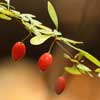
Invasive barberry plants have red fruit at this time of year. This one is growing alongside witch hazel and oak seedlings in the seep discussed by Andrew Wilcox.

Engulfed in many species of plants near a small wooden bridge over a stream, Ben Urquhart discusses the problems and causes of—and some solutions for—native and non-native invasive species. The best solution is to eradicate invasives when they are small.

Deborah O’Rourke tells participants about invasive species such as barberry, Norway maple, bittersweet, and autumn olive. From left: Luke Makosky, Liam Makosky, O’Rourke, and Tom Cotton.