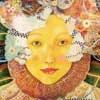
“ILift My Lamp—Illuminations from Immigrant America” is the title of a newly released album by Cambridge-based pianist Jacqueline Schwab, who is performing at Fivesparks Saturday, Nov. 19, at 7:30 p.m.
In a phone conversation, Schwab said she is looking forward to coming to Harvard, where she visited over the summer and spent time with Mark Mikitarian, president of Fivesparks. It’s great what the cultural center is doing, she said—being firmly rooted in the Harvard community and yet being welcoming to artists from other parts of the state and beyond. Her words were especially pertinent in light of what she is striving to do in her latest body of work.

Her new album is a collection of folk songs from various countries, and she hopes listeners will welcome the opportunity to hear songs reflective of different cultures beyond their own. And perhaps they might also hear a piece that comes from a country where their ancestors originated. She shares the songs to offer insights into the stories of people different from us but with whom we can feel connections or at least greater understanding.
Toward a more inclusive society
On the 19th, Schwab will choose songs from her new album—each of which is part of the diversity story—and introduce each with her reason for the choice, the country and time period it is from, and the story or dance tradition behind it. “My music is my way of saying, ‘Look outside ourselves.’”
The impetus for the album came from a few different directions, said Schwab. Partly it was the complexities of our time and her concern about the anti-immigration feeling in the country. Schwab said she was never in a position to contribute money to support politicians she believed in, but now here was a chance to support those values with her music. Immigrants are here, she said, and we need to figure out how to move to a more inclusive society. She said she doesn’t want to step on any toes but to capture the pride different cultures take in their beautiful community music. She doesn’t claim to be an expert on any of these cultures, but she does have some personal connection with each, and she has studied examples of the folk music of the different countries. Schwab is lifting her figurative lamp to illuminate the stories of other cultures as reflected in their music.
Schwab’s background exposed her to different cultures, and in this album she is returning to the diversity she experienced and embraced growing up. She was raised in Pittsburgh and spent her time playing the piano and reading folk tales from around the world. Her parents opened their home to people from all different backgrounds; it was nothing to have eight Chinese people for dinner, she said. She attended a folk dancing group in her teens and found in it a comforting acceptance she hadn’t always felt in other situations. She recalled a later trip to Transylvania with her husband for his work with a Unitarian church there. They stayed with a family in a small house with no running water and where language was a barrier. But the immersion in such a different culture had a lasting impression on her. “You can do more than you think you can,” she said.
The album is also a product of her desire to explore different genres and not remain “pigeonholed” in a particular style. “For a long time all I did was English country dance music,” she said. She credits her work with filmmaker Ken Burns for “jump-starting” her, showing her the value of exploring new genres and the power of music as story. It was luck that brought her to Burns. He happened to hear her group, Bare Necessities, and he hired her for his film “The Civil War,” which would be the first of several in which Schwab’s music is part of the soundtrack. “He wanted slower tunes and got me playing things I never thought I could play,” she said. The way Burns worked was to talk through the emotions of each scene. “He was like a sorcerer—he would tell me stories of the pieces as I was playing. I loved telling stories with music.”
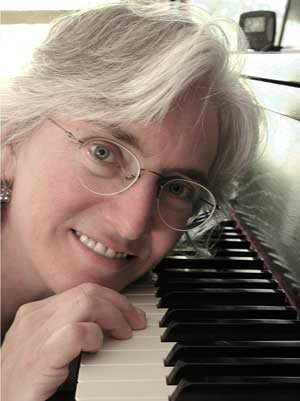
Jacqueline Schwab. (Courtesy photo)
In talking more about influences on her music, Schwab described her education at New England Conservatory. She was in a department then called Third Stream, which taught an improvisational approach to music. She said she could never have been a classical pianist, seriously competing with peers to be the best. In Third Stream, students were collegial and connecting, like a folk community. Schwab said one class her junior year required students to listen and perform pieces imitative of different styles. She remembered with some mortification having to perform rap on the piano. But this experimentation freed her up to put her own stamp on the music she chose to play. She interprets music through her own lens, what she calls “Schwabizing”—and what a listener might call honest and heartfelt.
Schwab used a couple of songs from her album as examples of her freestyle interpretations. “La Paloma” (The Dove) is a popular habanera, a slow, Cuban dance song—you hear it even in airports, Schwab said. The song reflects on love and loss between individuals, and it could also be an individual’s loss of homeland or political party. “I put in as much longing as I could,” said Schwab. Also she has added the sound of a bird to her rendition—an up-and-down on the piano, like the flying of a dove of peace.
An Irish song with a similar theme and the same sense of longing is the first one on the album. The personalizing here is to increase the poignancy by playing the song much more slowly than it is commonly played. The notes trail off in a kind of haunting echo. This song is followed by “The Blarney,” a lively dance set. In an oversimplification, one might see here two sides of Irish culture—the hardship and longing for something and the happy-go-lucky celebration of the moment.
Schwab’s music offers layers of meaning and enjoyment. There’s the obvious mastery of technique, but even more moving is the deep feeling with which she plays. In addition to the power of the music itself, there’s the story or the dance tradition of a different culture to imagine. And there are the personal experiences and feelings evoked through familiar tunes, what Mark Twain called “remembrancers.” While Schwab said she can play on most any piano that works, having a great piano such as the Steinway at Fivesparks will allow her to bring out the nuances of interpretation and show the Schwabized songs to their best advantage.
Tickets may be purchased at https://www.fivesparks.org/event/concert-pianist-jacqueline-schwab.
Jacqueline Schwab will have merchandise for sale after the concert, including her latest CD “I Lift My Lamp—Illuminations from Immigrant America.”