
“The Lightless Sky” is Gulwali Passarlay’s first-person account of his two-year journey as a refugee from Afghanistan making his way to the U.K., beginning in October 2006 when he was 12 years old. During that time, he endures dehumanizing conditions, is lied to and exploited, and is forced to leave friends behind for his own survival. In an epilogue, Passarlay writes that he wanted people to understand the plight of refugees and asylum seekers and to be inspired to find ways to help others, “so that a child of the future who reads this book will ask, ‘What was a refugee?’”
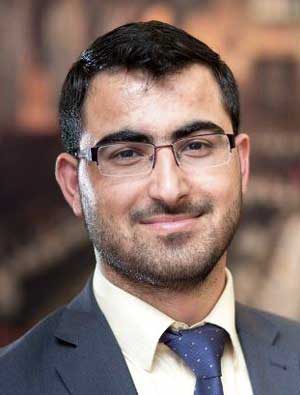
Author Gulwali Passarlay. (Courtesy photo)
The book is Arm in Arm’s ninth townwide read; a discussion will take place Thursday, March 24, at 7 p.m. on Zoom.
In its endeavor to foster awareness and understanding of cultural differences, Arm in Arm held its first townwide read in March 2019. That book, “The Faraway Brothers,” was about the arduous journey of two boys from El Salvador, brought to America by a human smuggler. Those brothers, Gulwali, and refugees around the world, including Afghans here in Harvard, all show the human tragedy of those who flee their homes to escape poverty and violence. And what of those who stay behind?
Gulwali describes a safe and happy childhood with his extended family in Nangarhar, the most populated province of Afghanistan. Somewhat indulged and raised in the rules of Islam, where males have all the power, he delights in bossing around his aunts. “Go and cover your head,” he would order them. The reader gets a strong picture of the beliefs and customs of Gulwali’s culture.
Everything changes when the American forces invade, searching for Osama bin Laden. Gulwali recounts the actions of American soldiers from his point of view. Increasingly, his family is caught in the violence, under pressure from the Taliban, and facing threats from the American troops wanting information. Gulwali says he and his older brother were just little boys, “but in the political and moral whirlwind of that time, we were pawns in a deadly game of chess.” Things become more dangerous, and in October 2006, Gulwali’s mother puts the lives of her two sons in the hands of a smuggler who promises to get them to Greece. “However hard it gets, don’t come back,” she tells them. “Hold each other’s hands always.”
But Gulwali and his brother are separated almost immediately. Caught in the network of human smugglers, Gulwali and his fellow refugees of many different ethnicities are passed from one agent to another, one truck to another, one safe stopover to another, never knowing where they’re going or whom they can trust. They have to walk for miles on end, exhausted, living on fear and adrenaline. More than once, just on the brink of crossing a border into safety, they are thrown into prison, where conditions are deplorable and they are treated like animals. Some of the “safe” places are run by people whose only motive is to get money, and so 300 men are crowded into a cowshed and given little to eat or drink. People come and go, and Gulwali learns he can’t let himself get attached to anyone.
As the book goes on, the reader may feel that the trucks, the prisons, the exploitative people, the walking, the waiting are redundant and things are going on too long. But looked at from the writer’s perspective, this was his experience—it felt endless, with the same nightmare over and over. “Just when you think you’re as miserable as you’ll ever be, life manages to show you more, laughing yet more loudly in your face.” Although some of the reflections are from an older Gulwali, for the most part the voice remains that of the boy of 12 and 13.

There are moments when the reader holds their breath, as Gulwali was doing, such as the time he is posing as the younger brother of the driver of a fancy car, with two other refugees in the trunk, waiting to see if they are believed by the police at a border crossing. Another time he is running for his life along a valley in the dead of night amid volleys of gunfire, and the reader is terrified along with him.
What keeps Gulwali going under this lightless sky is the desire to be reunited with his brother and for his mother to be proud of him. Also his faith in Allah and his own pride and need to prove he’s not a child. He makes friends who give him strength and encouragement, even though it is painful when they are forced to separate. And then there is humor: “Refugee humor is dark, but without it we’d have all gone mad.”
Obviously these experiences change Gulwali, and the reader watches him struggle with beliefs, judgments, and morals he once held that no longer make sense. He is far from that boy who bossed his aunts around for fun. But at the same time he is trapped in the nightmares of those experiences, and he struggles to find life worth living. He sees jihad as the holy war within oneself—bitterness, anger, and fear against faith, hope, and dedication to one’s fellow human beings.
In his epilogue the author writes, “We all have the power to help those around us, or to harm them. It is the choices we make that define our personal journeys and make us the people we are.”
To join the discussion, go to tinyurl.com/em53b232.