In 1873 the National Temperance Society put pressure on states to make it mandatory to teach the evils of alcohol in public and private schools. A science text, “Hygienic Physiology,” copyright 1872, is for advanced pupils and is part of a series originally prepared for temperance instruction.
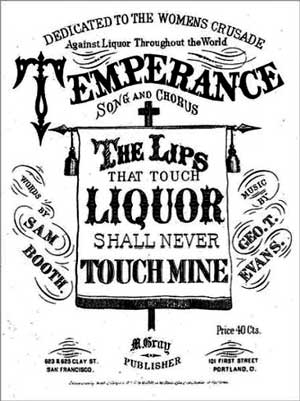
An extensive discussion of alcohol is spread over different sections of the book, from how it is made, to its lethal effects on plant life, to its “progressive appetite for itself,” to its various ruinous effects on the body. The argument is made that a man who drinks “only ale” takes in the same poison as he who drinks ardent spirits, so we are truly wise only when we “decline to measure arms in any way with an enemy so seductive in its advances, so insidious in its influence, and so terrible in its triumph.” A later chapter describes how alcohol contributes nothing to any part of the body, but instead “the heart flags, the flesh shrivels up, every tiny vein is inflamed like the blushing nose itself. A single glass taken as a tonic may lead to the drunkard’s grave.”
Public health problems were part of a student’s education, problems that remain today but don’t seem to be in the science curriculum.The introduction says attention will be paid to practical hygiene, a subject very much on the public mind. “The dangers that lurk in foul air and contaminated water, in bad drainage, leaky gas-pipes, and defective plumbing, in reckless appetites, and in careless dissemination of contagious diseases are here portrayed in such a manner as, it is trusted, will assist the pupil to avoid these treacherous quicksands and to provide for himself a solid path of health.”
The introduction then shifts to a more emotional appeal to the student to follow the good habits set forth in the book. “Thousands squander in early years the strength which should have been kept for the work of real life. In youth we throw away our strength as if it were a burden of which we desire to be rid. We eat any thing and at any time; do any thing we please, and sit up any number of nights with no sleep. Because we feel only a momentary discomfort from these physical sins, we fondly imagine when that is gone we are all right again. But some day Nature will refuse to meet our demand and we shall find ourselves physical bankrupts. We reap as we sow, and we may either gather in the thorns, one by one, to torment and destroy, or we may rejoice in the happy harvest of a hale old age.” Would this appeal be persuasive to a high school student of today?
In “Games for the Playground, Home, School, and Gymnasium” (1909), the writer, Jessie Bancroft, argues for an organized recess in which the entire class plays lively games. Bancroft says that activity instills discipline in children and does away with having some children standing around while only a small group plays. With a natural outlet for energy, the author asserts, children are less able to engage in bullying or mischief. A number of the games described bear resemblance to games we know; others seem a bit bizarre.
Some games involve an “odd player” who tries to get into the spot in the circle vacated by someone he has “tagged.” Drop the Handkerchief, Garden Scamp, and High Windows are forms of this to be played on the playground or in the gymnasium. Garden Scamp has an accommodation for the schoolroom that sounds rambunctious, even dangerous. The entire class forms a circle around the room as close to the seats as they can so as to leave room for the chase outside the circle. When possible, desk seats are “turned up” so runners can cross and recross the center square. The scamp, however, “may vault over seats in his efforts to escape the gardener.”
Games for the classroom include many similar to Hide the Thimble, where a player leaves the room and comes back to search for a hidden object. In Jacob and Rachel, two children are in the center of a circle of clasped hands. “Jacob” is blindfolded and calls out, “Rachel, where art thou?” To which “Rachel answers, “Here I am Jacob,” as she moves around in the space trying not to be captured. This sounds like the game Marco Polo that kids play in a pool these days.
Dramatic games were popular, where various parts are enacted by different players, some of the parts being quite lengthy. Lady of the Land seems bizarre, with elements of fairy tale, and it may have been meant to carry a warning, though it’s not clear to whom. The author says it is one of the oldest traditional dramatic games and is found in almost all countries. It is thought possibly to have come from the country practice in European countries of hiring servants at fairs.
In Lady of the Land, a poor widow with several children approaches a lady and, after touting the talent of each, pleads, “So pray take one of my daughters in.” This is repeated until the lady has taken all of the children, one at a time. After several days the mother goes to visit the children, but the lady is reluctant to let her see them. The mother finds each of them and asks how the lady treated them. One had a curl cut off to put in a pie, another an ear or a finger, and the children say the lady never gave them any! When all the children have spoken, they rise up and chase the lady, and she is led to prison. The game of Gypsy is similar to Lady of the Land, and it reflects the prejudice against gypsies and perpetuates the myth that they steal children.
The six or seven schoolbooks found in a carton during the move to the new Hildreth Elementary School reveal a lot about changing educational practices and societal values of the late 19th and early 20th centuries. The people who carried them from one schoolhouse to another and then, after 1905, from one part of the school building to another may not have done so intentionally for the edification of someone in the future, but whatever their reasons for hanging on to them, we can be grateful that they did.
Editor’s note: Part 2 of this series, “19th-century schoolbook dispenses doses of morality with its spelling lessons,” appeared in the June 18 issue of the Press.