Updated March 14, 2020
"I was captivated by the improbable election of Trump. Here was the best political story in generations,” writes reporter, editor, and author Ben Bradlee Jr. in the introduction to his 2018 book “The Forgotten: How the People of One Pennsylvania County Elected Donald Trump and Changed America.” He poses the overriding question, “Who, exactly, voted for Trump and why?” The book would answer that question, and Bradlee hoped that answer would stimulate dialogue between Republicans and Democrats and offer lessons for the future of the country.
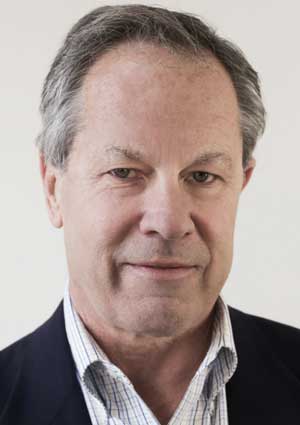
Ben Bradlee Jr. (Courtesy photo)
In the second program of this year’s Harvard Press Speaker Series, Bradlee will discuss his book with former colleague and Harvard resident Charlie Sennott. There will be an opportunity for audience questions, and a reception and book-signing will follow the conversation. The event, originally scheduled for Sunday, March 22, at 4 p.m. at the Congregational Church, has been rescheduled to the fall.
Bradlee goes on in the introduction to describe the process by which, having chosen a topic that fascinated him, he went about writing the book. He says the Trump story was “so rich in so many ways that for a writer, the main problem was where to begin a book—what approach to take. Narrowing down his investigation to figure out how to find the answer to his question, he found there were three Rust Belt states where the election had been decided: Pennsylvania, Michigan, and Wisconsin. Of those, Pennsylvania had the most electoral votes, and there was one county that had led the way in electing President Donald Trump. That county was Luzerne in the northeast part of the state, with a 2017 population of 317,343, and there is where the answer would lie.
The next step was to read as much as he could about Luzerne County. He learned of its history in coal mining, of its industrial decline, and of the young people leaving the area. He learned how technology, free trade, and globalization led to loss in manufacturing and created economic disparity. He learned of the crime and corruption and the influx of Latino immigrants. Bradlee then sought out public officials and community leaders who led him to about 100 people who seemed to represent a cross section of the president’s constituency. Out of those interviews, Bradlee chose a dozen people whose stories he would tell in depth.
Hardship and ambition
It is Bradlee’s decision to let these men and women of Luzerne County tell their life stories, not just the immediate deciding factors in their vote, that gives the book such authenticity and insight. In showing the real people behind the Trump vote, the hardships in their lives, their personal grievances and fears, their hopes and ambitions, Bradlee helps readers understand these people and realize why they voted as they did.
Former Hazelton mayor and former U.S. Rep. Lou Barletta speaks out against illegal immigration; Vita DeLuca says he identified with Trump’s calling Hillary Clinton corrupt because he saw corruption in his own county. Ed Henry, a veteran, thinks the Democrats have been slipping away from the people for a long time and resents being called stupid; bartender Marty Beccone complains about high taxes and the cost of Obamacare; and Brian Langan, a policeman, has no time for political correctness and says what we need is good jobs for good wages. He criticizes the elites for caring more about animal rights than jobs. Another voice is that of a white nationalist who was elected to a local Republican committee.
Lynette Villano, active in local politics for more than 30 years, says she got tired of Obama apologizing for the country and wanted an outsider, a businessman, and someone who would curb illegal immigration. Hairdresser Donna Kowalczyk says she has seen her neighborhood fill with drugs, prostitutes, empty stores, and minorities and was hoping for a jolt to the economy. Kim Woodrosky says she’s not wealthy but is subsidizing others and objects to Obamacare and an entitlement mindset, and to bureaucratic red tape. Representing the growing number of evangelicals in Luzerne, one woman explains her loyalty to Trump by saying God is the government, and God chose Trump.
Common threads
It is from these stories that Bradlee found common threads and learned the reasons for Trump’s victory in 2016. These men and women felt left behind economically; they felt the Democrats encouraged people to seek out welfare; they feared immigrants, both legal and illegal, would “disinherit” them; they felt disrespected and ridiculed by the elites. In Trump they saw an agent for change, someone who would shake up Washington; in him they felt heard without judgment and that their frustrations were acknowledged. Here was someone unconcerned with political correctness, a man, not a politician, someone who talked the way they talked.
In a recent phone call, Bradlee said after the book came out, he traveled back to Luzerne County for several speaking engagements. He said many of the people he had interviewed spoke positively of the book and felt they had been presented respectfully. Beyond that, he has kept in touch with some of them, including Lynette Villano who, during her interview for the book, had shown Bradlee a stream of texts between herself and her college grandson, a Sanders supporter. Villano and her grandson were equally articulate about their opposite, entrenched positions. As it has for so many other people and their relationships, this political divide has continued to estrange Villano from her grandson.
“The Forgotten” follows Bradlee’s several other books and a 25-year career at the Boston Globe as reporter, political editor, Metro editor, and deputy managing editor, during which time he oversaw the Spotlight Team through the Pulitzer Prize-winning coverage of the sexual abuse scandal in the Catholic Church.
From high school to the Globe
Bradlee’s interest in journalism was piqued as early as high school, when he worked a summer in the sports department of the Globe. He said he was an avid sports fan then—and now—and it was “a kick” to work with people known to him by their bylines. “I got coffee for the stars,” he said. One could say that his first investigative reporting was with the Fish Finder for the Massachusetts coast, which tracked types of fish and conditions of the moment, learning what the bluefish, cod, and mackerel were up to.
Bradlee said his dad, a renowned editor for the Washington Post, “didn’t push me.” Instead, he went into journalism because of a connection he made while in the Peace Corps. During his two years in Afghanistan—“a country you had to look up on a map back then”—he met the news editor of a medium-size newspaper in Riverside, California, who was on leave to serve in the Peace Corps.
Interested in California and in seeing a different part of the country, Bradlee took a job with the Riverside Press-Enterprise in 1972. He talked to his dad regularly about his progress. His last assignment there was covering the third murder trial of a black activist accused of killing two white policemen in what was called “the crime of the century.” The previous trials had ended with a hung jury, and in the third, the accused was acquitted. Although he had no publisher, Bradlee quit his job to write a book, “The Ambush Murders,” about the case and small-town justice in emotionally charged circumstances. He did find a publisher and later the book became a movie for TV.
In 1979 Bradlee was hired by the Boston Globe and was happy to be back working for his “hometown paper.” Because of his Peace Corps experience, he was chosen to go to Afghanistan as part of the first wave of Western reporters invited into the country when the Soviet Union invaded it. He found a very different scene from that of 1970, with the land occupied by Soviet tanks. The invitation was abruptly withdrawn by a knock on his door at 2 o’clock one morning and an order to pack his bags.
‘The best job’
Back in Boston he had “the best job” where, as a national reporter, he was a rover and would parachute into different locations to cover a story. He also spent time reporting from abroad. After working his way through different editorial positions, he became deputy managing editor.
In 2004, after being with the Globe for 25 years, Bradlee retired. Not only was that a long time to sustain such intense work, but Bradlee said the print newspaper business was declining—“The internet changed everything.” He spent the next 10 years writing “The Kid,” a book about his childhood hero, Ted Williams. Books about Williams existed, but none of them talked much about his life off the baseball field. Bradlee took his time with the research, continually finding new material as his sources led from one person to another. One of those people was Williams’ daughter, who agreed to talk to him about her father’s death. “I really got into it,” said Bradlee about the book. “It was great fun and also a commercial success.”
Then came 2016 and “the realization that this is a very big country.” Bradlee began looking for a different way into the Trump story. He found it in “The Forgotten.”
Editor's note: This article has been updated. The original article reported the date of the Harvard Press speaker event with Ben Bradlee Jr. to be March 22. The event has been rescheduled to the fall, either late September or early October.