School Superintendent Linda Dwight and Aziz Aghayev, the school business manager, presented the first draft of their fiscal 2021 budget to the School Committee at its Nov. 12 meeting. The proposed budget totals $14,375,380, an increase of $583,628—or 4.3%—over fiscal 2020. This school budget, when finalized, will become part of the town’s omnibus budget, submitted to voters for approval at next spring’s Annual Town Meeting.
Aghayev also sent committee members copies of the budget in an online folder, with links that allow them to view each area in more detail with a single click—a new feature for the committee.
CLICK TO ENLARGE
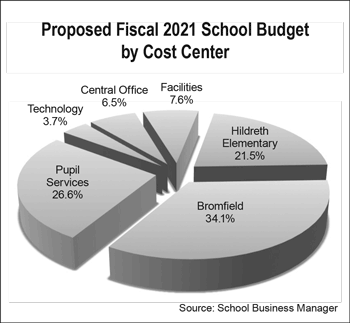
Each year the school budget figures are grouped into six cost centers. This graph shows what share of the total budget goes to each of those cost centers. It’s not always obvious what is in a cost center. For example, the central office cost center includes not only the salaries of those who work in the district office, but also other whole-district costs such as bus transportation and legal fees.
As in past years, the school budget has six cost centers. The accompanying graph shows the relative share of the budget each cost center represents. For fiscal 2021, facilities and building maintenance is expected to have the smallest increase (about $11,000). Dwight credited facilities manager Jon Snyer and school electrician Dave Woodsum with saving costs by doing needed work themselves, rather than hiring outside contractors. Hildreth Elementary has the biggest increase (about $191,000), driven primarily by salaries and curriculum materials.
By far the largest share of the overall school budget goes to salaries—nearly 80%. Next year’s budget shows salaries increasing about 3.3%, with most of the increase slated to occur in the elementary school.
Some teachers may already have told administrators of their plans to retire. When a veteran teacher retires, schools can usually expect some savings in the budget’s salary line, as a new teacher almost always comes in at a lower pay level. (The schools offer a financial incentive for teachers to give plenty of notice about impending retirements, both because it allows more time to find well-qualified replacements and because it makes budgeting more accurate.)
The schools’ non-salary costs are expected to rise a little over 8%. Among the big-ticket items in this category are higher costs for the contract with Dee Bus Service, a new math curriculum with textbooks and workbooks at the elementary school, and some new chairs and desks at Bromfield to replace ones that have broken over the years. In the pupil services budget sector, there has been a significant increase in the number of students who need specialized, out-of-district programs. However, part of the money spent in fiscal 2021 on their tuition will be reimbursed in fiscal 2022 through the state’s Special Education Circuit Breaker program.
The proposed budget also takes account of money the school district receives from outside sources, such as the School Choice program, state and federal aid, bus fees, and community education programs. These and other subsidies to the schools’ operating budget are called “offsets” in budget discussions. Offsets reduce the amount the schools ask taxpayers to provide in the omnibus budget.
The schools’ largest offset is the Devens fund, money that MassDevelopment pays the Harvard school system to educate students who live in Devens. In fiscal 2021, the Devens fund is expected to contribute about $1.5 million to the budget, which includes tuition, transportation, and technology costs. That is about the same amount the fund provided to the schools this fiscal year.
As in other years, the school budget will doubtless go through several drafts during discussions among the School Committee, the Finance Committee, and the Select Board during December 2019 and January 2020.