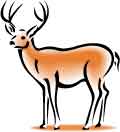
Yipes! I said to myself as I sat in meditation after reading the umpteenth post on Nextdoor Harvard regarding the opening of deer hunting on conservation land. Everyone’s given their opinion except the deer! With that realization I became obsessed with what the spirit of the deer might say.
Now don’t get me wrong. I’m not a deer whisperer. Nor can I claim to have channeled the spirit of the deer, although that could be possible. Like many of us I do know that deer are conscious ensouled creatures with instinctive mind and great heart. What would they want us to consider? So I plunged into the task of imagining what their feelings and concerns might be. I’ve had a lifelong relationship with deer as a basis for my reflections. “Bambi” was the first movie I ever saw. Our milkman was a hunter and he’d bring my mother venison, welcome meat during World War II rationing. I never ate it. In graduate school I lived on a commune in the Ithaca hills. We used to go out into the meadows at dawn, after our all-nighters, to watch the deer playing in our fields. They had the freedom and time to play that we didn’t.
Later I became an animal communicator and plant spirit medicine apprentice and treated my clinical psychology patients with flower essences. I’ve met the deer spirit in shamanic journeys, and the deer became my totem animal. I also draw on the knowledge of the views of indigenous peoples and how their leaders thought that bear and other animals should be given seats at treaty negotiations with the U.S. government. Animals were seen as subjects, not objects or digits to be counted.
I’ve also had all the problematic interactions with deer that are of concern to us all. A few years ago a deer jumped suddenly on my car on Route 2 and, vanishing into the woods, left me with a $1500 repair bill. When I moved to Harvard I planted a 16-bush rose garden, and deer ate every rosebud on every plant on one night. They have pruned one of my cherry trees to near extinction. I walk in our conservation land every day and I’ve been bitten by ticks, contracting Lyme disease, babesiosis, and anaplasmosis. But when they browse in my backyard my heart leaps at their presence: their size, their freedom and wildness, their innocence. A few years back I saw a magnificent buck with a huge rack of antlers drinking at Bowers Brook; I was mesmerized by his beauty and power. When I’ve met the spirit of the deer in shamanic journeys it has always heralded an opening of the heart. So I’ve been moved to speak for the deer as subjects and conscious neighbors of a special type, the ones I share my living space with although I see them only occasionally.
We have always been hunted in every land all over the world where we have lived. Some of our predators, like wolves and coyotes, help us manage our herds by killing our old, and weak, and sick. This helps us breed strong, healthy offspring. In long ago times before all the takings, before the genocides, in lands and cultures where the two-legged are our predators we have had a very deep exchange. We have had the joy of sustaining you with every part of our bodies— our flesh, our hides, our bones. In return we’ve received respect and gratitude, and ceremonies have taken place to honor us. We have been the means of initiating young men with coming-of-age rites of passage. To hunt us they must be brave as we lure them deep into the forest where all the mysteries are. They must demonstrate great courage and prowess to find us there and take our lives. In doing so they would need to internalize our qualities of strength and protectiveness and innocence and freedom. And even the young girls could see and feel the wellsprings of loving motherhood in our does’ eyes.
We may play a part in the carrying of small creatures that are harmful but so do you. You spread disease among yourselves but you don’t cull the children who have measles because other children catch it from them. You think there are too many of us on your lands. Like you, we must do what we need to sustain ourselves, and with less and less open land and forests we must nibble on plants you prefer. You put up fences so we can no longer help you prune your orchards. We no longer have the deep woods where the mysteries are to be found, but your children need to learn about all of us who live here. What will happen to you two-leggeds if your children cannot mingle with us safely in the important harvest time of the year? How will they know about nature’s great cycles and the importance of turning inward for regeneration when the cold sets in? How will they know how the seasons change and the ways we creatures survive if it isn’t safe for them to experience it directly?
Like you we cherish our young and we teach them the ways of nature and how to live in balance with all the life that is here. We want to live in harmony with you. We don’t take more than we need. We have been glad that we are givers and sustainers and we have reveled in the respect and gratitude shown us. It makes us sad that some of your hunters can’t feel us or treat us with respect. Hiding high in trees and shooting us in the back is cowardly and until now we have been teachers of bravery. Hanging our heads on your walls doesn’t mean you are strong and brave and protective. Is it no longer possible for us to teach you our noble qualities? We both need places of safety where real learning and mutual appreciation may take place.
Having reflected as much as I can right now, I sit in meditation again. And what wells up in me is a huge sense of gratitude to Walt Disney. After all, he taught me in his captivating way that animals have feelings and families and care for each other decades before science began to zero in on the consciousness, intelligence, and emotional life in the world around us. That awareness could be a basis for decision-making, finding balance, and choosing sustainable actions. Thank you Walt! Thank you Bambi!
Susan Curtiss, a Harvard resident, lives on Old Mill Road.