At its Sept. 4 meeting, the School Building Committee voted to submit the design development package for the new Hildreth Elementary School to the Massachusetts School Building Authority (MSBA). This is one of three milestones in the design phase, and so far, the project is on budget. That doesn’t mean that cost estimates remained the same for the thousands of line items that together represent the labor, materials, and equipment needed to build a new 85,214-square-foot school and tear down the old one. This week the Press takes a closer look at what changed in the latest estimate from Shawmut Design and Construction.
The budget for the school remains at $53.6 million, but current direct construction estimates (labor, material, and equipment) constitute only about 62 percent of that figure. The remainder of the budget goes toward items such as design and project management costs, contingencies, and furniture. Estimates for direct construction costs were prepared in January 2018 for the MSBA schematic design submission and again in August for the design development submission. The table below shows the cost increase or decrease in each of the construction categories from the January estimates to the August estimates.
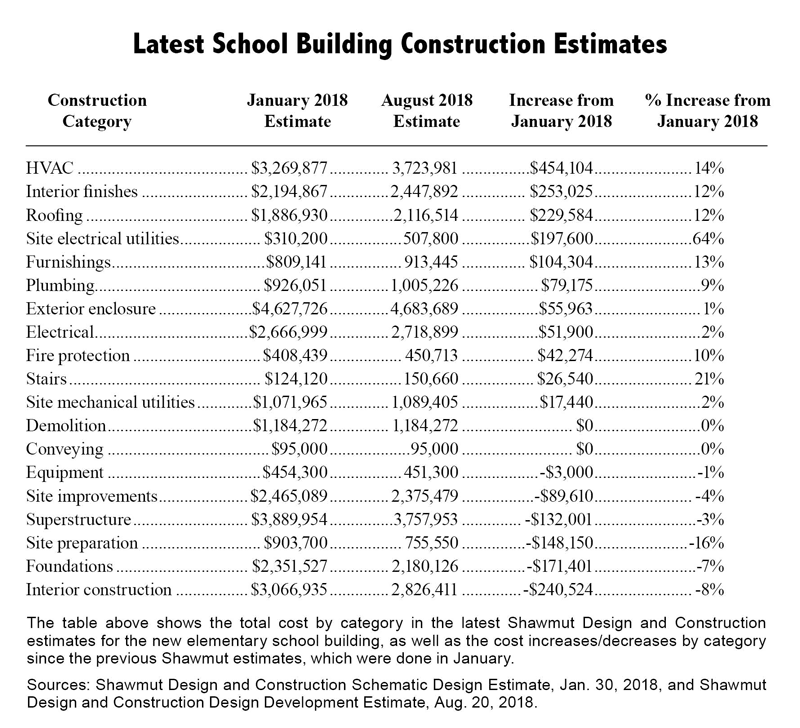
Overall, cost increases were due mainly to fleshing out the design. Project Manager Tom Murphy told the building committee that the building’s structure, envelope, and materials are now well defined. The project has two budget cushions in the design phase—the design and pricing contingency and escalation—and $1.1 million of the two cushions was used to cover the August estimate increases. About $2.3 million remains to cover any increases in the final two design phases, which will consist of filling in details and producing construction documents.
HVAC increases top list
The highest dollar increase in the latest estimate, nearly half a million dollars, came in the heating, ventilation, and air conditioning (HVAC) category. Almost all of this increase came from changes to the actual design of the main HVAC systems. Murphy told the Press that while small additions may still be on the horizon, the systems are now fairly well designed. Major changes since the January estimate include the addition of a chiller to condition air in some spaces, an increase in the amount of piping, and changes to the number and size of air-handling units and controls. In addition to these upgrades, there were two cost increases in HVAC materials: one for pipe insulation, a $3,000 total increase, and the other for the displacement diffusers, which will provide dehumidified air to rooms in the building that are not air conditioned, such as classrooms. The number of diffuser units was reduced in this estimate, however, negating the price increase.
Interior finishes also rise
The second-highest cost increase in a category was for interior finishes, which includes wall, floor, and ceiling finishes. The largest increase to wall finishes, about $45,000, was due to increasing the amount of ceramic wall tile in the bathrooms from about 4 feet up the wall to the full wall. On the floors, a $58,000 premium for a more moisture-resistant adhesive was added. In the ceiling, more radiant heating panels were added, and insulation was added to the ceilings under the pitched roofs where the air-handling equipment will reside. The spaces under the pitched roofs will now also have insulation to prevent condensation from forming on the steel columns, and to allow the installation of the same sprinkler system as in the rest of the building. Insulating the pitched roof spaces represents most of the increase in the roofing category.
In the site categories, the large jump in the price of the site electrical utilities was caused by the need to add a generator to power the sewer pump and the fire pump in the event of an electrical outage. The fire pump itself, required because the water flow rate tested too low for fire equipment needs, added about $55,000 to the fire protection estimates.
Prices steady, but expected to rise
Prices in general held fairly steady in the estimates. Although metal prices were expected to rise in this round of estimates due to tariffs imposed on steel and aluminum, very few steel prices increased. Structural steel, HVAC ducts, and piping prices remained the same as in the January estimate, and about 75 percent of the HVAC pipe prices actually went down. Aluminum window prices, which included both materials and labor, rose about 6 percent.
The largest cost decrease in the estimates, in the interior construction category, was not really a cost decrease. $266,000 was moved out of this category when Shawmut decided to shift a total of $800,000 of cleaning and safety costs from construction to general requirements, a category that represents project overhead. This shift also lowered the August totals for the superstructure, foundations, and site preparation categories.
More to come in November
The next round of estimates will come in November when construction documents are scheduled to be 60 percent complete. The MSBA submission packet, which includes the detailed estimates, is available for public view at the school superintendent’s office in the Bromfield House next to the Hildreth Elementary School on Mass. Ave.

Photograph taken by a drone of the current Hildreth Elementary School with the new school outline superimposed. (Courtesy photo)