As we noted in this week’s editorial, the only contested seat for a state office on Harvard’s ballot this year is for Middlesex and Worcester District senator. The three candidates are Democratic incumbent Jamie Eldridge of Acton, running for a fifth term; Republican Ted Busiek of Littleton; and independent Terra Friedrichs of Acton. We asked each candidate to respond to five questions, the top choices in a poll of our reporters in which they were asked to choose from among 20 questions. We asked the candidates to refrain from criticizing their opponents, but rather to use their statements to articulate their positions for Harvard voters. Their responses follow.
Terra Friedrichs

Terra Friedrichs. (Courtesy photo)
What is your position on whether Harvard and Ayer should make a concerted effort to take back jurisdiction over land in Devens sooner rather than later?
I support all efforts to do so. If MassDevelopment is not using the land to serve “the social compact” (according to the state Constitution), the towns have the right to assert control. In land planning, sooner is almost always better than later. The Supreme Court often rules in favor of whoever acts upon a land use sooner than the other (“prior use” claims). With that said, Massachusetts is a “strong home rule state,” and thus municipalities have rights that are often stronger than state agencies.
What would you do to address the effects of global warming in Massachusetts?
A carbon fee would ensure that people who use more natural resources pay for their use and would increase the investment in green energy. I’m in favor of all of the current proposed carbon fee bills. I’m in favor of opening up the secret meetings at the State House so that we can see what companies and politicians are controlling the outcome. The weakness in the recent round of energy bills is blamed on what’s happening “behind closed doors” (see Acton LWV Forum 10/24, at ActonTV.org). If elected, I will actually tell you what is happening behind these closed doors, so you can do something about it. I’m in favor of tax and regulatory shifts to protect small/local sustainably oriented private enterprise. From electric power to farming, we give away too much to large international corporations who crush our food, energy, and economic security. I’m against S2311 to expand Chapter 40B fake affordable housing and greenwashing it as “sustainable growth.” This bill is aimed to accelerate growth, not constrain it. Unnecessary new building accounts for virtually 100 percent of the increase in carbon footprint. Green Rainbow Party-endorsed candidates call for a building moratorium with the exception of housing for very and extremely low-income people and buildings that a community believes will serve the social compact. For far too long, large corporations and developers have trumped our local communities for their own profit. To reduce our impact on the environment, we need to reduce the amount of money in politics. I’m a co-founder of PassMassAmendment, which aims to amend the Massachusetts Constitution to clarify that “corporations are not people, money is not speech” [H933, S53]. Let’s not wait till Washington, D.C., fixes this problem; I do not believe that we should be opening up the U.S. Constitution to Congress via an Article V Constitutional Convention.
What is your position on raising the cap on charter schools?
I am against lifting the cap with this legislation. I am willing to consider other legislation, but not this legislation. I hear the claims that charter schools help kids get a better chance. But I don’t see the evidence. I have spoken directly with employees of charter schools who have told me not to believe the hype. Some students have benefited. But the current legislation allows charter schools to cherry-pick students and leave behind those who need the greatest care. It is not the unions that are hurting our public schools. I believe that it’s a lack of willingness to actually fund our public schools fairly and appropriately.
Where do you stand on referendum question 4 to legalize marijuana in the state?
Yes! It’s time to stop prosecuting people for marijuana use. I was on the fence because “small farmers” had complained to me that they would be put out of business because the large corporate marijuana industry would make sure licenses would be too expensive for small enterprise. But the legislation that is proposed now includes a clause that ensures fees will not make small farmers economically inviable. If legislators want a different bill, they should be spending their time figuring out fixes so they will be ready once this bill passes.
What else should voters know about your candidacy?
My main goal is to help us make the world a better place. I hope to return power to local people, while also ensuring equitable access to natural resources for residents. I want to open the doors of the State House so you know where your money is going, so that you know who is stopping important reforms. I have helped do this on a local and regional basis. Now I want the chance to do this at the State House. Large corporations and developers are increasingly controlling what happens, whether it’s fake affordable housing, unsustainable energy policy, or overregulating healthy small business. I want the State House to work for us, rather than for moneyed interests.
If you believe, like me, that real change will never come within the two-party–one-party system, then please consider voting for me. Please look at my positions on my Facebook page: facebook.com/terrafriedrichs. A vote for me tells the establishment that change is needed.
Jamie Eldridge
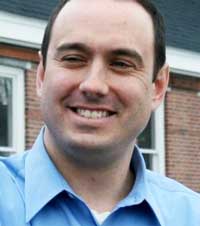
Jamie Eldridge. (Courtesy photo)
What is your position on whether Harvard and Ayer should make a concerted effort to take back jurisdiction over land in Devens sooner rather than later?
I do not have a position on this, as I believe it is up to the three towns, Ayer, Harvard, and Shirley, to come to this decision together. However, I do believe that MassDevelopment, the Devens Enterprise Commission, the EPA, and the U.S. military should remain vigilant in cleaning up any leftover brownfields on Devens land, and that transportation, water, and utility infrastructure should be complete, so that any future discussions of taking back jurisdiction over land in Devens have the assurance that no contaminated property remains and the Devens land is fully developed.
What would you do to address the effects of global warming in Massachusetts?
I am proud to be a leader in the Massachusetts Legislature to combat climate change, including being the lead sponsor this session on legislation to increase financial incentives for community solar, to establish net-zero energy homes and buildings, to encourage more electric and hydrogen fuel cell cars on the road, and to create an Oil Heat Energy Efficiency Fund, all of which would help reduce greenhouse gases. This session, I was also proud to co-sponsor and pass solar net metering, omnibus energy, and gas leaks bills into law. Finally, I do believe we need to have strong environmental and alternative energy enforcement state agencies, and I have led the fight in the state Senate to oppose deep budget cuts and support increased funding for these agencies. Finally, my role in bringing the Harvard Community Solar Garden to a reality remains among my proudest accomplishments as a legislator.
What is your position on raising the cap on charter schools?
I oppose question 2, to lift the charter school cap and allow up to 12 new charter schools per year. While I have great affection for charter schools like the Parker Essential Charter School, I am deeply concerned about the potential budget cuts that could happen in public schools if more charter schools are established in the Nashoba Valley–North Central Mass. region. Until the Legislature properly funds public schools and fixes the charter school funding formula, including the underfunded charter school reimbursement fund, I cannot support such an aggressive proposal as question 2. Finally, I do have serious concerns about how some charter schools educate a much lower percentage of special needs and ELL students in comparison to the communities that they serve; policies such as counseling out underperforming students; and using lotteries in a way to attract only high-performing students.
Where do you stand on referendum question 4 to legalize marijuana in the state?
I support question 4 to regulate and tax marijuana for adults ages 21 or over. With around 800,000 Massachusetts residents who are recreational marijuana users, I believe it is time to take marijuana out of the shadows, away from the drug cartels, criminals, and drug dealers, and move to a highly regulated system that will move away from the black market system, barriers to employment, and arrest records that harm many families. If marijuana is regulated and taxed, Massachusetts can limit access, use public health campaigns to discourage teen use, and create a system that works for everyone. It is important to remember that the people who use marijuana today will still use marijuana after November 8; why not transform the sale of marijuana to one that is more safe, regulated, and taxed?
What else should voters know about your candidacy?
I am very proud to have represented the Middlesex and Worcester District for eight years, and the 37th Middlesex District as a state representative for six years, adding up to representing the people of Harvard for 14 years. Harvard is a community full of residents who are leaders on issues of the day, from civil rights to education, to environmental protection, to alternative energy and climate change, to farming, to business entrepreneurs, to human services.
The legislation that I file, and the budget priorities that I fight for, are often because of the advocacy and energy that Harvard residents put their time, passion, and energy into. I strive to be a state senator who not only attends community events, meets with constituents, and provides excellent constituent services, but also is a leader on a wide variety of issues that affect the lives of residents of the Commonwealth of Massachusetts every day. In addition, I am proud to continue to be an independent voice on Beacon Hill, whether taking on corporate special interests, the wealthy and connected, or the Democratic leadership.
I humbly ask for your vote once again, on Tuesday, November 8. Thank you very much for your consideration.
Ted Busiek

Ted Busiek. (Courtesy photo)
What is your position on whether Harvard and Ayer should make a concerted effort to take back jurisdiction over land in Devens sooner rather than later?
Not being a resident of either Harvard or Ayer, I’d be out of place to suggest a course of action on an issue so specific to your two towns. I would respect whatever you decide.
What would you do to address the effects of global warming in Massachusetts?
I’m not worried about global warming. If the climatological community ever approaches consensus on the matter, maybe I’ll start to pay more attention to it then.
What is your position on raising the cap on charter schools?
I’m in favor of raising the cap on charter schools; I’ll vote yes on question 2.
Where do you stand on referendum question 4 to legalize marijuana in the state?
I’m opposed to legalizing recreational marijuana use; I’ll vote no on question 4.
What else should voters know about your candidacy?
As your Republican state Senate candidate in the Middlesex and Worcester District, I’m finding that the issue most people know me for is my push to exempt products made in Massachusetts from our state sales tax. Right now the state of Massachusetts imposes a 6.25 percent sales tax. I’m proposing that any product made in the state be exempt from this tax. This would give Massachusetts shoppers an extra incentive to buy locally made products, and local manufacturers an extra incentive to stay here.
However, I’d like to use this space to address a different issue, one that has been troubling me and that I think deserves your attention:
In the course of my campaigning, I had the honor of meeting a couple whose lives were torn apart by an unnecessary tragedy, a horrible crime that could have easily been prevented.
In 2011, while riding home on his motorcycle, their 23-year-old son was struck by a pickup truck, dragged a considerable distance, and killed.
According to news reports at the time, the driver was an illegal alien, and was intoxicated. He pleaded not guilty and showed no remorse for his crime. He was sentenced to 12 to 14 years.
Though the accident occurred five years ago, the driver’s wife has yet to be deported. Why is that? Her husband had been in Massachusetts for years prior to the incident. He had multiple previous arrests. Why had he not been deported? To all Massachusetts voters reading this I ask: Why are you putting up with this?
I propose a two-part solution to our immigration problem:
- No welfare or benefits of any kind for noncitizens, whatever their legal status.
- When any illegal alien is arrested, the police must hold them until they can be deported.
In my commitment to these two points, I will be unwavering. This is my promise to the voters of the Middlesex and Worcester District, a promise I take just as seriously as my promise to fight for a more protectionist tax structure. You read it here.