
The prospect of finding a hidden treasure is always enticing, but do Harvard residents know that there are dozens waiting to be discovered in their own backyards? Over the past five years, Harvard has become a central hub for geocaching—an outdoor treasure hunt using GPS-enabled devices.
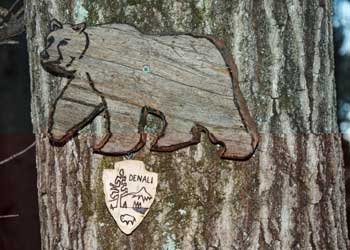
A geocache marker. (Courtesy photo)
“I truly believe Harvard is in the middle of geocaching mecca,” says Boxborough resident Walker Royce, who—along with his wife, Jennifer—has been a finder and publisher of geocaches since 2010. “This area has some exceptional finders and some creative hiders. There are such diverse conservation lands and a very fun community of outdoorsy, nature-loving people that you can interact with online and out on the trails.”
According to the website geocaching.com, geocaching got its start on May 3, 2000, the day after the government opted to get rid of “selective availability,” a measure that intentionally degraded GPS signals for national security reasons. To test the newfound accuracy of GPS devices, computer consultant Dave Ulmer placed a stash in the woods in Beavercreek, Oregon, and posted the coordinates on a GPS users’ Internet group.
Within days, the stash was found, and other enthusiasts began hiding their own stashes, which soon became known as “geocaches.” Just three months later, a website that compiled the rapidly growing list of user-created caches—the aforementioned geocaching.com—was born. The site now lists more than 2.7 million caches worldwide.

A natural wood cache. (Courtesy photo)
To get started, Royce recommends creating a free account on geocaching.com and entering an address into the website’s search bar. “Seeing where the close-by caches are will entice you,” says Royce. “There are a lot.” By Royce’s estimation, there are more than 300 caches within a 10-mile radius of Harvard, and “at least one on every conservation land” in town.
Royce also suggests tagging along with someone who has some familiarity with geocaching. “I think that’s the way to do it,” he says. “Find somebody from the community who can kind of guide you. You don’t realize all that’s out there until you go do it.”
East Bare Hill Road resident Kris Rojas agrees, and she finds the accessibility of geocaching to be a big draw. Rojas uses a free smartphone app available at geocaching.com to assist in her hunt for caches. “It’s something you can do anywhere,” she says. “If you have a few minutes to kill, you can just fire up the app and see what’s around. It’s a great way to see your neighborhood.”
Although Royce and his wife have found roughly 500 caches, they most enjoy the publishing aspect of geocaching, having created 70 caches, 18 of which are located in Harvard. “We sort of own Harvard,” Royce says with a laugh. “We’ve done most of the publishing.”

Geocaches are hidden around town. (Courtesy photo)
Royce says there are three main types of caches: the traditional cache, which is typically a set of coordinates that leads to the cache; a multistage cache, where the first set of coordinates will lead to additional coordinates; and a mystery cache, which is Royce’s favorite type. Mystery caches require the user to solve a puzzle to determine the coordinates of the cache.
Most caches are waterproof containers that are disguised to appear natural to the surroundings. “That’s what a good geocache is,” says Royce. “Something you’d never notice unless you were specifically there looking for it.”
Inside the cache are record logs—which the finders sign—and trinkets, which finders are encouraged to take and replace with something of equal or greater value. After a cache is discovered, finders are encouraged to go on geocaching.com and record their experiences.
“It’s really the only payment in this,” says Royce. “But as a publisher, that’s kind of cool; you get an email that somebody found it and liked it.”
Excitement of the hunt
Royce adds that geocaching is something that people of all ages and abilities can enjoy, but he notes that families with young children are especially attracted to the trinket-trading element of the activity.
Eleven-year-old Marley Roy, daughter of Ann Lees Road resident Scott Roy, agrees. “I love geocaching,” she says. “It is like a big game of trade worldwide.”
Roy notes that while her favorite trinket recovered from a cache has been a SpongeBob SquarePants golf ball, the excitement of the hunt is what draws her to the activity. “You just don’t know what you’ll discover unless you try!”
West Bare Hill Road resident Jennifer Charland says that she and her husband turned to geocaching to make hiking more adventurous for their two young children. “We love being out in nature, and finding a way to involve the children has been wonderful,” she says. “Having a goal for the hike helps young kids stay on track and motivates them to keep going.”
Charland and her family also use the free geocaching app to assist in their discoveries. “We let the kids use the technology to follow the path and find the way,” she says. “They love to take control of the process and be in charge.”
Rojas says that Harvard is especially well suited to geocaching. “There are very unique places in this area to hide caches,” she says. Royce agrees.
“To me, Harvard’s got a hidden gem,” he says. “I think the caches in this area are some of the best.”
For more information on geocaching and how to get started, visit www.geocaching.com.