School officials unveiled their spending plans for the coming year this week, asking taxpayers for $12.3 million, a growth of roughly 2.43 percent over last year’s budget. The school budget typically accounts for approximately 55 percent of the entire town budget in any given year.
School Superintendent Linda Dwight led the three-hour presentation, which took place at the Dec. 15 School Committee meeting in the Bromfield teachers’ lounge. Afterward, the committee unanimously approved the request, which now goes to the Finance Committee for additional review.

CLICK IMAGE TO ENLARGE
The meeting was attended by the heads of the schools’ six cost centers as well as the full School Committee and Finance Director Lorraine Leonard, who helped prepare the thick yellow binders that detailed expenses ranging from paperclips for the central office to a new $53,000 server to replace aging computers in the IT department.
Was the “bottom-up,” zero-based budgeting introduced by former interim superintendent Joe Connelly still “alive and well”? committee member Bob Sullebarger wanted to know. “Yes it is,” answered Dwight. But unlike the Connelly years, when budget reviews typically lasted several nights, Monday night’s session was the “fastest” ever, according to Leonard.
Bromfield, HES get largest increases
CLICK IMAGE TO ENLARGE
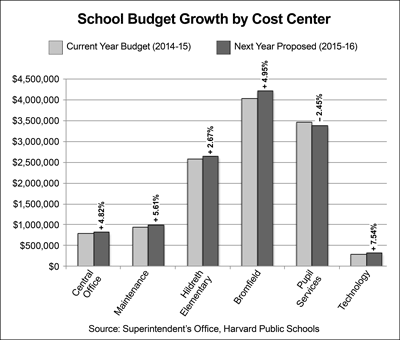
Among the six cost centers, the Bromfield and Hildreth Elementary schools and special education (pupil services) departments are the largest, and the technology department the smallest (see pie chart). Technology will get the largest percentage budget increase this year so that IT leader Chris Boyer can complete a planned upgrade of the servers and networks that support student and faculty computers (see bar chart). “Are we getting ahead of that curve?” Sullebarger asked. “Yes,” said Boyle.
The largest dollar increases will go to boost faculty salaries at both Bromfield and Hildreth. Principals Jim O’Shea and Sue Frederick observed that a number of teachers were making “column moves” because of the completed additional education that moves them to a higher pay scale. The special education budget is projected to drop 2.47 percent—a savings of $85,200—because of changes in the state’s policies for reimbursing schools for their handling of special needs students. But pupil services director Marie Harrington warned that the new payment scheme is riskier and could lead to sudden changes in her budget midyear if the population of special needs students in Harvard were to change.
Devens will offset expenses
The money that Harvard is expected to receive from MassDevelopment for the education of Devens students has been allocated throughout the budget, with each cost center receiving an offset to help cover some portion of its expenses. These details will be explored in future Press articles.
Before turning on the slide projector and digging into the budget book, meeting attendees gathered for an informal dinner of stuffed peppers and cookies provided by Chef Paul Correnty. Then HES Principal Sue Frederick was asked to read one of the Harvard Schools’ core value statements from the new strategic plan. “We appreciate that the Harvard community provides the necessary resources to best serve our students and we hold ourselves responsible for the appropriate use of those resources,” she read.
Said Finance Director Leonard at the close of the meeting: “You’ve done a very, very good job.