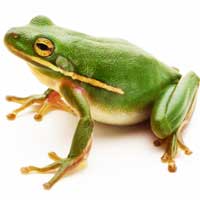
What do canaries, frogs, and groundhogs have in common? The presence of each in certain contexts provides information about the state of a system, whether it’s a coal mine, the weather, or the health of our very own Bare Hill Pond. When spring arrives in Harvard, many of us rake our lawns, others tune up their bicycles, and some of us count frogs. Have you heard them lately? If you’re near a pond or wetland, you’re likely to hear a chorus of them every evening. The peep-peep-peep chorus you may think is crickets is actually the sound of peepers, a species of frog. This is the time of year they come out of hibernation and start their singing. The Bare Hill Pond Watershed Committee (Pond Committee) has been counting frogs for 20 years as a way to monitor the health of Bare Hill Pond, which is especially important amidst the drawdowns, storm water treatment projects, and other methods we use to control invasive weed growth and water quality.
The Pond Committee invites the public to help with the frog count this spring. In addition to monitoring the health of the pond, the primary reason for the count, the committee offers the following top 10 reasons for counting frogs in Harvard:
- Commune with nature. Experience it in ways you may not have ever before.
- Test your hearing. It’s important in this job.
- Learn a new language. Each species has its own unique and interesting dialect.
- Give something back. We need help covering all locations and continuing the tradition.
- Lower your blood pressure. Health experts tell us we’re too stressed. Slow down for a while.
- Rekindle a romance. Team up with your true love.
- Earn community service hours. Students, National Honor Society members: get your hours.
- Get in touch with your inner Audubon or Goodall, as the case may be.
- Take a break from your iPod or iPhone or other electronic device.
- And finally, impress your friends with frog imitations.
The spring frog count is fun and easy to do, and it requires just an hour after dusk on three evenings this spring, starting as early as Sunday, April 20. The Pond Committee will train you and acclimate you to the calls of several local frog species, such as peepers, pickerel, and others. Counters go out in groups of two or more to six different locations. The data captured tells us whether the frog population has changed significantly, which could be an indication of a change in the health of the pond environment.
To join the count or to find out more, contact Pond Committee member Tom Gormley at jtg3@alum.mit.edu.