New for Children

If You Were a Chocolate Mustache: Poems
by J. Patrick Lewis; drawings by Matthew Cordell
Children’s Poet Laureate J. Patrick Lewis shows how wickedly funny he can be in “If You Were a Chocolate Mustache,” his collection of humorous poems. With 125 poems, illustrated with side-splitting black-and-white art, this book offers a potpourri of subjects: animals, school, weird things, wacky inventions, foods, computers, and more. The poems display a lively range in length—from only a few words to multiple verses—and form—riddles, limericks, nonsense poems, haiku, shape poems, etc., showing why Lewis is such a beloved and honored poet. Matthew Cordell’s expressive characters and humorous artwork are the perfect complement to the poems.
New for Young Adults

Shadowfell
by Juliet Marillier
Sixteen-year-old Neryn is alone in the land of Alban, where the oppressive king has ordered anyone with magical strengths captured and brought before him. Eager to hide her own canny skill—a uniquely powerful ability to communicate with the fairy-like Good Folk—Neryn sets out for the legendary Shadowfell, a home and training ground for a secret rebel group determined to overthrow the evil King Keldec.
New for Adults
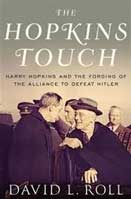
The Hopkins Touch: Harry Hopkins and the Forging of the Alliance to Defeat Hitler
by David L. Roll
“The Hopkins Touch” offers the first portrait in over two decades of the most powerful man in Roosevelt’s administration. David Roll shows how Harry Hopkins, an Iowa-born social worker who had been an integral part of the New Deal’s implementation, became the linchpin in FDR’s—and America’s—relationships with Churchill and Stalin, and spoke with an authority second only to the president’s. Gaunt, nearly spectral, and malnourished following an operation to remove part of his stomach, the newly widowed Hopkins accepted the president’s invitation to move into the White House in 1940 and remained Roosevelt’s closest advisor, speechwriter, sounding board, and friend, nearly to the end. He became FDR’s problem-solver and fixer, helping to smooth over crises. Lacking an official title or a clear executive branch portfolio, Hopkins could take the political risks his boss could not, and proved crucial to maintaining personal relations among the Big Three. Beloved by some—such as Churchill, who believed that Hopkins “always went to the root of the matter”—and trusted by most, including the paranoid Stalin, there were nevertheless those who resented the influence of “the White House Rasputin.”
Based on newly available sources, “The Hopkins Touch” is an absorbing, substantial new work that offers a fresh perspective on the World War II era and the Allied leaders, through the life of the man who kept them on point until the war was won.