New for Children

Fake Mustache: Or, How Jodie O’Rodeo and Her Wonder Horse (and some nerdy guy) Saved the U.S. Presidential Election from a Mad Genius Criminal Mastermind
by Tom Angleberger
Award-winning author Tom Angleberger flexes his comic muscle in this hairy adventure story with twists at every turn. Regular kid Lenny Flem Jr. is the only one standing between his evil-genius best friend Casper, a master of disguise and hypnosis, and world domination. It all begins when Casper spends money from his granny on a spectacularly convincing fake mustache, the Heidelberg Handlebar #7. With it he’s able to rob banks, amass a vast fortune, and run for president. Is Lenny the only one who can see through the disguise? And will he be able to stop Casper from taking over the world? By the award-winning author of “The Strange Case of Origami Yoda.”
New for Young Adults

Such Wicked Intent
by Kenneth Oppel
Devotion turns deadly in this second Gothic thriller from Kenneth Oppel. When does obsession become madness? Tragedy has forced 16-year-old Victor Frankenstein to swear off alchemy forever. He burns the Dark Library. He vows he will never dabble in the dark sciences again—just as he vows he will no longer covet Elizabeth, his brother’s betrothed. If only these things were not so tempting.
When he and Elizabeth discover a portal into the spirit world, they cannot resist. Together with Victor’s twin, Konrad, and their friend Henry, the four venture into a place of infinite possibilities where power and passion reign. But as they search for the knowledge to raise the dead, they unknowingly unlock a darkness from which they may never return.
New for Adults
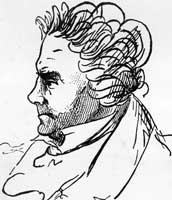
The First Four Notes: Beethoven’s Fifth and the Human Imagination
by Matthew Guerrieri
This is a unique and revelatory book of music history that examines in great depth what is perhaps the best-known and most-popular symphony ever written and its four-note opening, which has fascinated musicians, historians, and philosophers for the past 200 years.
Music critic Matthew Guerrieri reaches back before Beethoven’s time to examine what might have influenced him in writing his Fifth Symphony, and forward into our own time to describe the ways in which the Fifth has, in turn, asserted its influence. Guerrieri uncovers possible sources for the famous opening notes in the rhythms of ancient Greek poetry and certain French Revolutionary songs and symphonies. He confirms that, contrary to popular belief, Beethoven was not deaf when he wrote the Fifth. He traces the Fifth’s influence in China, Russia, and the United States (Emerson and Thoreau were passionate fans) and shows how the masterpiece was used by both the Allies and the Nazis in World War II